

Die Casting Digital Twin: From Fill Simulation to Closed-Loop Control
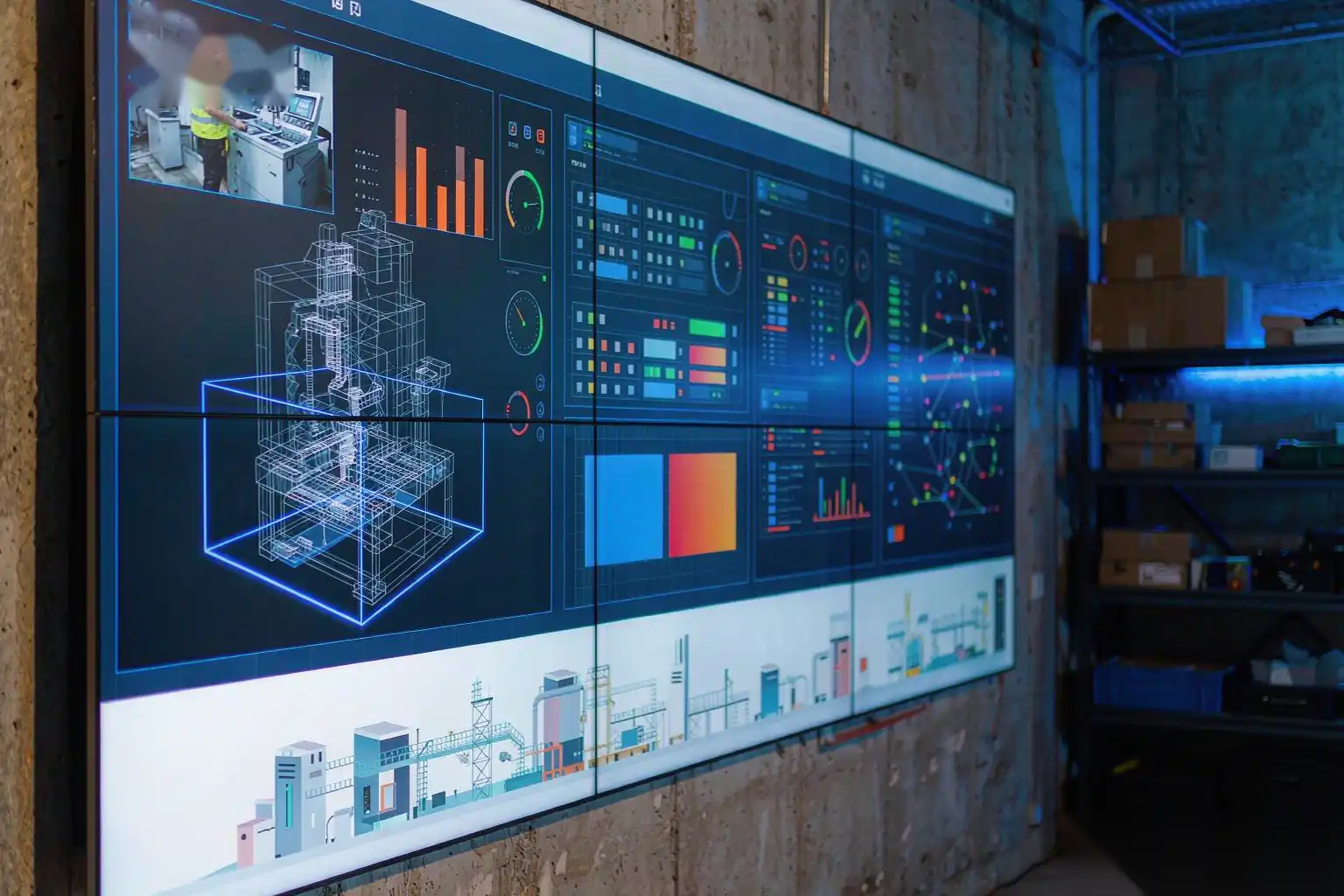
Most die casters already run fill simulation. They build a mesh, set the shot profile, watch the metal race through the runner, and export a report that says the part is castable. That report is a static picture taken before the first cavity was cut. A digital twin is different: it is a living model of the actual machine, the actual die, and the actual molten metal, continuously corrected by sensor data from the floor. This article explains what a digital twin adds beyond one-off simulation, how machine sensor data is linked to the model, how it predicts defects before they appear, and what data infrastructure a foundry needs before any of this is worth attempting.
What a digital twin adds beyond fill simulation
A conventional fill simulation answers a design question: will this gating and this shot profile fill the cavity without obvious cold shut or severe air entrapment? It is solved once, on an idealized geometry, with material properties from a handbook. The limitations are well known to anyone who has watched a simulation predict a clean fill and then scrap the first 200 shots.
- The simulation uses nominal dimensions. The real die grows from thermal cycling, the real plunger has wear, the real alloy has chemistry variation shot to shot.
- The simulation uses a target shot profile. The real machine delivers a profile that drifts with hydraulic temperature, accumulator pressure, and valve wear.
- The simulation is solved offline. It does not see that the furnace temperature dropped 18 degrees during the shift change or that the die lube cycle ran short because an operator hurried.
A digital twin keeps the geometry and physics of the simulation but binds it to live data. Instead of asking “is this design castable,” it asks “is this specific shot, on this specific machine, at this specific moment, going to be good, and if not, what do I change?” The model is re-solved or at least re-evaluated against measured inputs every shot or every batch, so it tracks the drift that the static simulation assumes away.
The practical difference shows up in two places. First, the twin flags a shot that is heading out of window before it becomes a visible defect, so the correction happens on shot 812 rather than at the quality audit of the bin. Second, the twin tells you which variable to act on. A static simulation cannot tell you that raising the fast-shot velocity by 0.2 m/s will recover the fill because it does not know your actual plunger is 4 percent slow. The twin does, because it is measuring that plunger.
Linking machine sensor data to the model
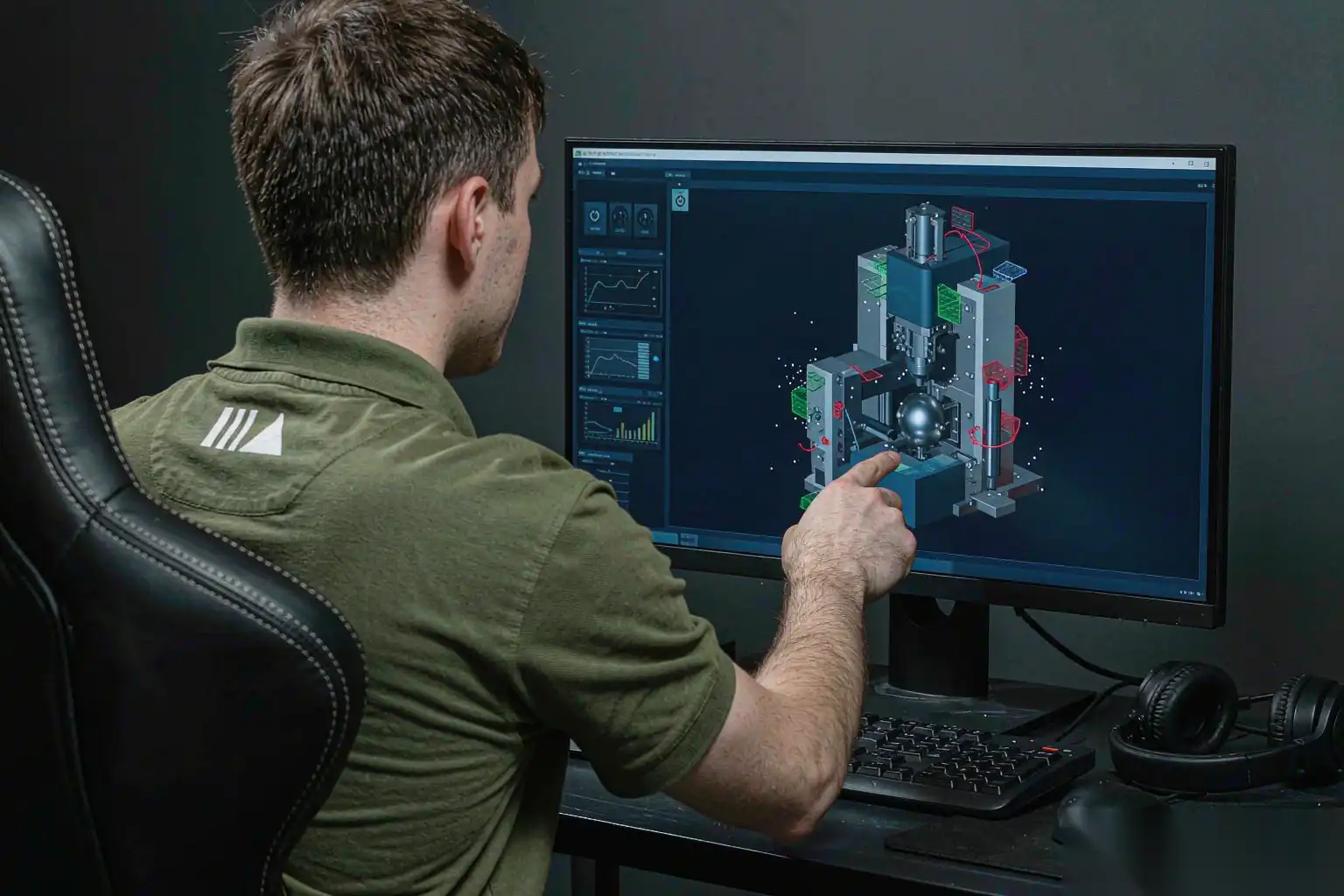
The twin is only as good as the data feeding it. The minimum sensor set to make a die casting twin meaningful is modest but non-negotiable, and it must land in a time-aligned record per shot.
- Shot profile. Plunger position and velocity versus time, sampled at 1 kHz or better, so the twin can compare the commanded fast-shot velocity against what the machine actually delivered.
- Intensification pressure. The final hydraulic or servo pressure holding the shot, which drives the feeding and the solidification shrinkage compensation.
- Die temperature. Multiple thermocouples in the cavity steel at the gates and hot spots, not just the water inlet temperature, because the steel surface temperature is what the metal sees.
- Furnace and ladle temperature. The actual molten temperature at pour, including the drop between furnace and shot sleeve.
- Cycle timing. Die open, eject, lube, and close times, because a shortened lube or a delayed close shifts the thermal state.
- Metal chemistry where available. Alloy lot, if the plant tracks it, feeds the solidification model.
Each of these is tagged with a shot ID and a timestamp and written to a store the twin can read. The twin then runs a fast evaluation: it takes the measured shot profile and die temperatures, runs a reduced-order version of the fill and solidification model, and predicts the fill quality, the local solidification time, and the likely defect sites for that specific shot. A full re-mesh every shot is unnecessary; the value is in the per-shot parameter check against a model already built from the detailed offline simulation.
The aluminum die casting flow simulation work establishes the base model the twin reuses: the validated gating, the cavity mesh, and the material card. The twin does not replace that engineering; it keeps it honest against the machine that is actually running.
Predicting defects before they happen
The payoff of the per-shot evaluation is prediction. The twin does not wait for a porosity callout or a leak test failure. It watches the variables that cause those failures and raises a flag when they cross a threshold tied to the physics.
Common defect predictions a twin can make:
- Cold shut risk from low pour temperature or slow first-phase velocity, detected when the measured profile falls below the validated window at the thin wall.
- Air entrainment from an over-fast shot or a poorly timed slow-to-fast transition, computed from the actual velocity curve against the gate critical velocity.
- Hot-spot shrinkage porosity from a die thermocouple reading above the validated steady state at a rib junction, predicting a local solidification time long enough to starve feeding.
- Misrun from a short shot or a plunger that did not reach position, caught immediately from the position trace.
- Dimensional drift from a die-temperature deviation that changes the thermal expansion of the cavity, flagged before the CMM samples the bin.
The prediction is only useful if it is actionable and trusted. We express it as a per-shot quality score and a short list of the one or two variables most responsible, so the line lead knows whether to adjust the shot profile, call maintenance on a sticky valve, or let the die temperature recover after a stoppage. A twin that says “this shot is bad” without saying why is an alarm people learn to ignore.
The underlying physics for porosity and shrinkage is well established in casting references, and the twin makes that physics operational by detecting the specific condition on the floor rather than in a textbook case.
Closing the loop: correcting process drift
Prediction stops scrap only if the twin can drive a correction, or at minimum hand a precise correction to the operator. There are three levels of loop closure, and a plant should pick the level its control system and culture can support.
- Level 1, alert only. The twin flags the off-window shot and the responsible variable. The lead adjusts the machine manually. This is the entry point and already cuts scrap because problems are caught at shot, not at audit.
- Level 2, recommended setpoint. The twin computes the shot-profile or temperature change that would bring the next shot back into window and presents it as a recommended value the lead accepts. Human stays in the loop, but the calculation is done.
- Level 3, automatic correction. For variables the controller can act on safely, the twin writes the corrected setpoint directly, within a bounded range, and logs the change. This is appropriate for shot velocity and intensification within validated limits, and inappropriate for anything that needs a physical die change.
The boundary on automatic correction is deliberately tight. A twin should never auto-adjust beyond the window the process engineer validated, because an unbounded correction can chase a sensor fault into a worse state. The safe design is a correction envelope: the twin may move the fast-shot velocity within plus or minus 0.3 m/s of nominal, and outside that it alerts a human. That envelope is derived from the same simulation that proved the part castable.
The three loop-closure levels differ in who acts and what the twin is permitted to do, and the choice sets the operating discipline for the line.
| Level | Who acts | Twin permission | Appropriate variables | Risk if misused |
|---|---|---|---|---|
| 1 Alert only | Line lead manually | None, flags only | All detected deviations | Alarm fatigue if flags lack cause |
| 2 Recommended setpoint | Lead accepts | Proposes value, no write | Shot profile, die temp, timing | Wrong window if base model invalid |
| 3 Automatic correction | Twin writes | Bounded within envelope | Fast-shot velocity, intensification | Chase a sensor fault if envelope too wide |
This is where the twin pays for itself on cycle as well as quality. Process drift that used to be corrected by a slow manual campaign, often by slowing the whole line, can be caught and countered shot by shot, holding throughput. The die casting process data monitoring practice is the floor-level data discipline that makes this loop possible, because the twin is only a consumer of clean, time-aligned shot data.
Data infrastructure a foundry needs first
A digital twin fails more often from bad data plumbing than from bad physics. Before buying any twin software, a foundry should have the following in place, roughly in order.
- A per-shot data record. Every machine must emit a structured shot record with a unique ID, not just a paper log or a proprietary controller screen nobody exports. If you cannot get the shot profile out of the machine as data, you cannot build a twin.
- Time alignment. Sensor streams from different suppliers must share a clock and a shot ID, or the twin evaluates the wrong shot against the wrong temperature. Network time synchronization and a common shot trigger are prerequisites.
- A historian with retention. The twin learns the drift signature over weeks, so you need months of shot data retained, not overwritten every shift. Plan storage for the sample rate; at 1 kHz per machine over ten machines, the volume is larger than most plants expect.
- A single model source. The validated simulation geometry and material card must be the same object the twin reads, version-controlled, so a die change is reflected in both. Disconnected copies drift.
- Defined windows and envelopes. Someone must set the good-window and the correction envelope from engineering, not from the twin guessing. The twin enforces the window; it should not invent it.
- An owner. A twin without a process engineer who owns the windows, reviews the flags, and tunes the model becomes shelfware. Assign the role before the project, not after.
The trap we see most is plants that buy the visualization first and the data plumbing never. They end up with a pretty dashboard of stale numbers. The discipline of die casting yield and scrap reduction is the foundation: you cannot twin a process you are not already measuring and holding. The twin amplifies good data discipline; it does not replace the need for it.
A worked example: catching shrinkage before the CMM
Consider a bracket with a rib junction known to be a shrinkage-porosity site. The offline simulation set the gate so that, at steady die temperature, the junction solidifies last but still feeds. The twin monitors the die thermocouple at that junction every shot.
On shot 1,204 the thermocouple reads 6 degrees above the validated steady state because a die-open delay let the steel soak. The twin’s reduced solidification model shows the junction now solidifies before feeding completes, predicting a shrinkage void. It flags “shrinkage risk, cause: die temp high at junction, action: delay next shot 8 seconds or reduce cycle speed to recover thermal state.” The lead accepts the recommended 8-second recovery. Shot 1,205 reads back in window, the predicted void never forms, and the CMM bin later confirms zero porosity at that site.
Without the twin, the 6-degree deviation is invisible until the next scheduled sample or a customer leak-test reject, by which point a bin of 800 brackets may carry the defect. The twin converts a thermal excursion into a one-shot correction. Multiply that across the defect modes in the prediction list and across a year of production, and the scrap reduction funds the data infrastructure several times over.
Where a digital twin does not yet help
Honesty about limits matters. A twin is strong on the variational, parametric drift that a real machine introduces against a validated design. It is weak on things it cannot sense.
- It does not catch a broken ejector pin that leaves a mark, unless that mark correlates with a measurable variable, which it usually does not until too late.
- It does not replace first-article validation. The base simulation and the physical prove-out still happen; the twin keeps the proved part in window, it does not prove a new part.
- It is only as good as the window someone set. A twin faithfully holding a bad window just makes bad parts consistently.
- It needs volume. A jobbing shop running 50 different parts for 500 shots each gets less value than a high-volume plant where the same window is defended for a million shots.
These limits are why we frame the twin as a defense of a validated process, not a substitute for process engineering. The simulation builds the window; the sensors feed the twin; the twin defends the window shot by shot. Each layer does the job it is good at.
DZ Smart Manufacturing builds die casting lines and the downstream robotic finishing cells, and we integrate per-shot process monitoring and digital-twin evaluation into the cell and line control so that quality is defended at the machine rather than audited after the fact. Talk to our engineering team about your shot data and we will scope what a twin could defend on your floor before you commit to the infrastructure.