

QUICK FACTS
| Typical cycle | 20–120 s/part |
| Spindle range | 6,000–18,000 RPM |
| Force control | Active compliance ±5 N |
Best robotic polishing machine searches return a wall of brochures, each claiming the crown. The honest truth is that “best” depends on your parts, volumes, and support needs. What this guide can do is turn the brochure wall into a scoring framework.
We define what actually differentiates polishing robot builders, give you a scoring table that survives procurement review, and list the demo checks that reveal more than any spec sheet. Bring it to your next vendor day.
What “Best” Means for Polishing Robots
Four capabilities separate leaders from followers in robotic polishing. None of them appear prominently in marketing material, which is precisely why you need a framework.
Force Control Quality
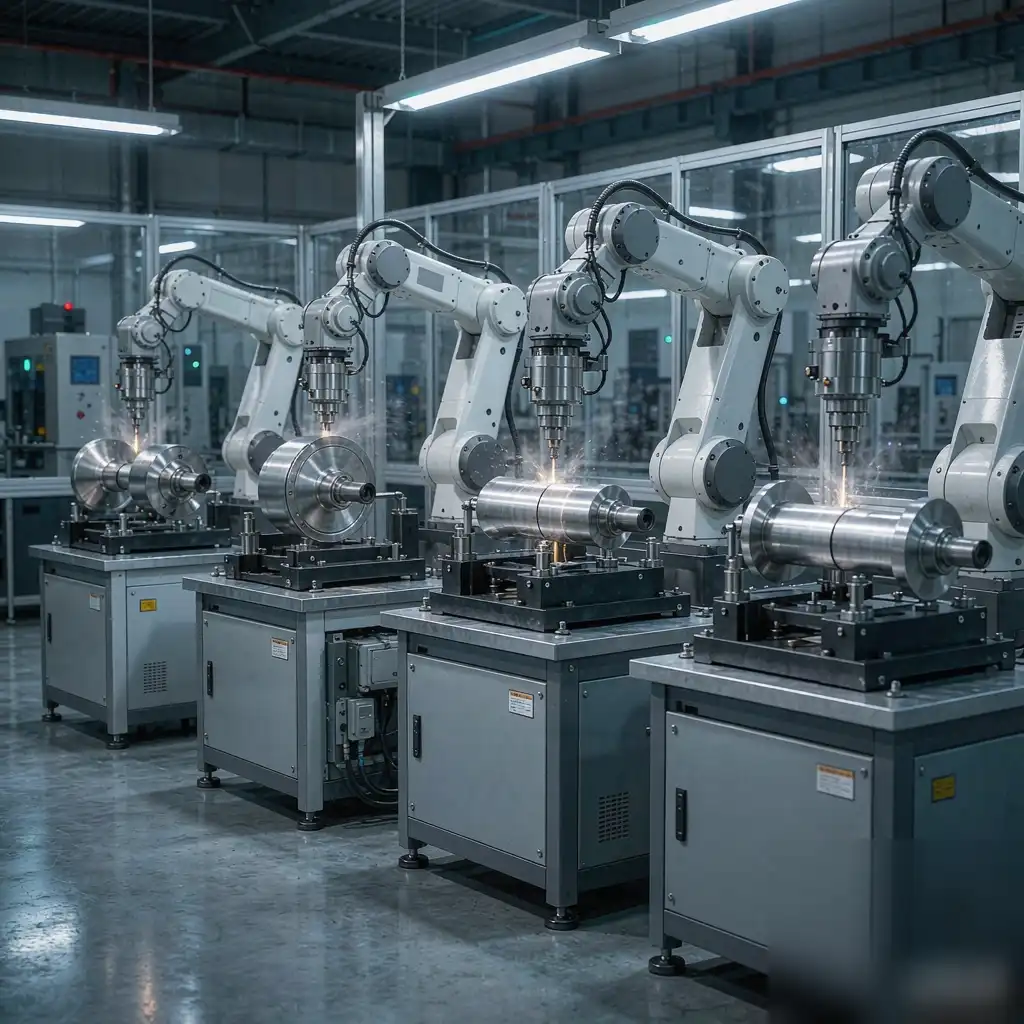
Polishing lives on consistent contact pressure. The best systems hold force within a few percent across a warped casting. Weak systems oscillate with part variation, and the finish shows it. Ask to see force traces from a real cycle, not a diagram.
Tool Wear Compensation
Buffing wheels shrink every hour. Leaders measure the wear and compensate automatically, keeping cycle parameters stable. Followers schedule manual compensation, and finish quality drifts between adjustments. Ask how the machine knows its wheel diameter.
Path Flexibility
Complex parts need paths that follow geometry, not just positions. The best builders generate paths from your CAD quickly and edit them easily. Watch a programmer modify a path live during the demo. Speed and ease tell you everything.
Consumable Ecosystem
Machines eat wheels and compounds. Leaders offer automated compound feed, predictable wheel life data, and local consumable supply. Ask for wheel life statistics on parts like yours, because consumable costs compound over years.
Builder Archetypes in Today’s Market
The market sorts into three archetypes. Each serves different needs well, and matching archetype to your situation matters more than any individual brand ranking.
| Archetype | Strengths | Watch For | Best Fit |
|---|---|---|---|
| Global robot brands with process packages | Reliable hardware, worldwide service | Polishing know-how sits with integrator | |
| Specialist finishing integrators | Deep process knowledge, proven cells | Fewer resources, check financial health | |
| Machine builders with robot add-ons | Strong mechanics, turnkey lines | Robot software may lag competitors |
Specialist integrators often win mid-volume polishing work because their process libraries encode years of wheel-and-compound tuning. Global brands win where service geography matters most. Neither wins everywhere, so rank your own priorities first.
The Scoring Framework
Score every finalist on the same ten rows. Weight them by your priorities before the demos, so enthusiasm during a good demo does not rewrite your weights. The table gives suggested weights for a typical mid-volume casting shop.
| Criterion | Weight | Verify By |
|---|---|---|
| Force control performance | 20% | Force traces on your test part |
| Finish consistency over shift | 15% | First and last part of demo run |
| Changeover speed | 12% | Timed changeover during demo |
| Programming ease | 10% | Live path edit by their engineer |
| Consumable economics | 10% | Wheel life data on similar parts |
| Local service capability | 12% | Reference calls, response times |
| Training quality | 8% | Syllabus review, trainer background |
| Spare parts availability | 8% | Dispatch promises in writing |
| Safety integration | 5% | Guarding and standards compliance |
| Total cost honesty | 0% | Quote completeness per this guide |
The last row carries zero weight by design. Total cost is not scored; it is audited. A cheap quote that omits extraction, spares, and training is expensive in the only currency that matters, which is year-three reality.
Demo Checks That Reveal the Truth
Vendor demos are rehearsed, but specific checks still cut through. Send your own test parts, not theirs, and insist on running them unannounced if possible. Five checks tell you more than a week of meetings.
The First-and-Last Test
Measure finish on the first part and the last part of a full shift-length run. Leaders produce near-identical readings. Drift between them predicts your quality conversations with customers a year from now.
The Variation Test
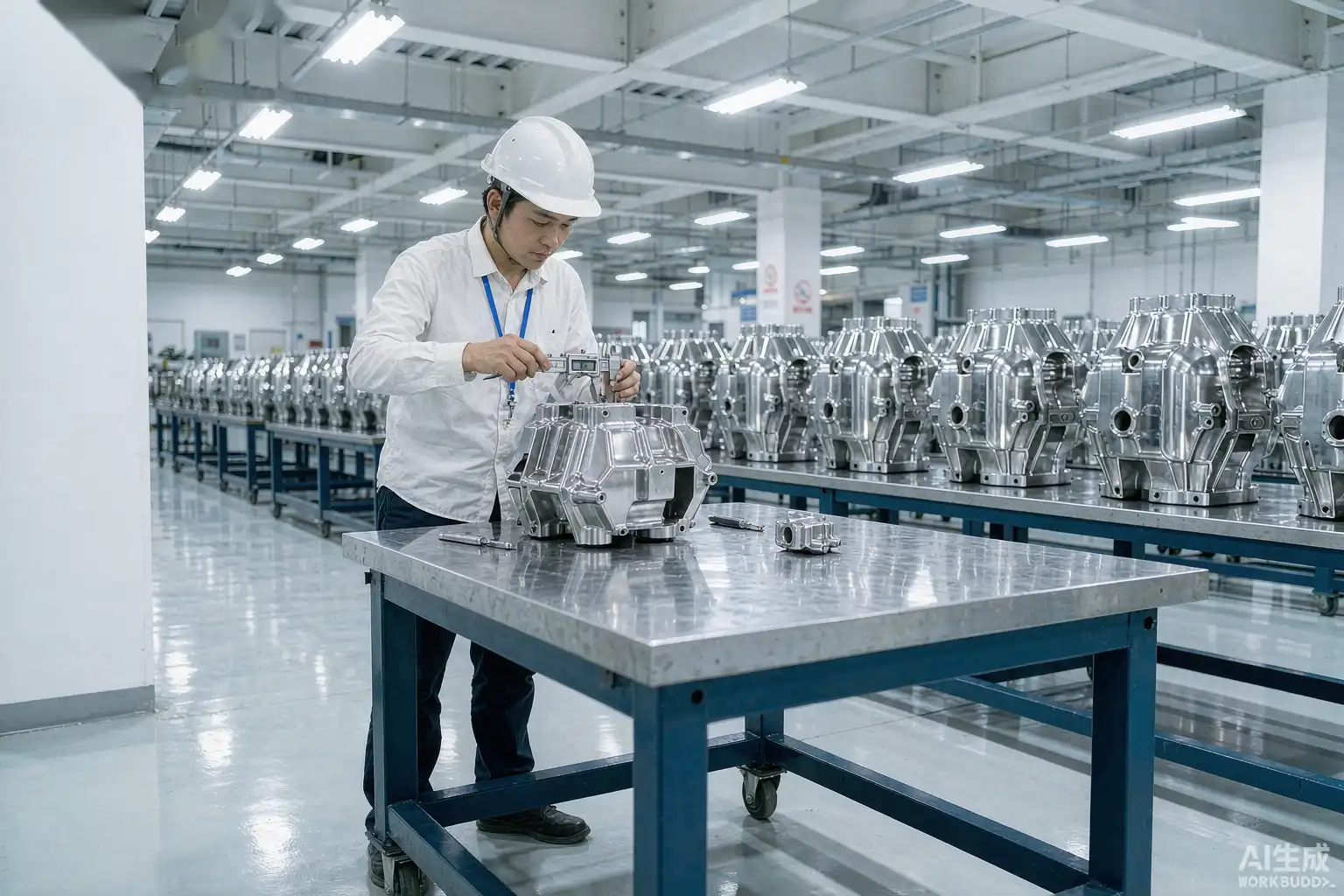
Include castings from different production batches with honest dimensional spread. Force control quality shows immediately. Machines that only polish perfect parts will polish only your perfect days.
The Changeover Test
Time a real changeover to a second part family. Watch what the operator does versus what the machine does. Minutes on the clock here become hours in your production calendar every week.
The Recovery Test
Ask what happens when a wheel tears mid-cycle. The answer reveals sensing depth and error handling. Good systems stop, log, and resume safely; weak ones discover the problem at inspection.
The Operator Test
Have your least-experienced operator run the cell after standard training. If they can, the HMI and recovery logic are genuinely good. If only the vendor’s engineer can, you are buying a dependency, not a machine.
The last test also feeds your training plan. Our operator training guide for automated grinding and polishing builds on the same principle: machines your team can run beat machines that run your team.
Service and Support Comparison
Support decides year two through year ten. Compare finalists on four support metrics, and get the numbers in writing during the quote stage, not after installation.
Response and Resolution Times
Ask for remote response hours and on-site arrival days, in writing. Then call two references in your region and ask what actually happens when they call. Reality has a way of differing from the promise.
Remote Diagnostics
Machines that phone home with error codes resolve half their issues without a visit. This capability matters more as your fleet grows, and it separates modern builders from legacy ones immediately.
Consumable Supply Chain
Wheels and compounds must arrive on schedule. Ask where they ship from, what stock they hold regionally, and what their lead times run. A perfect machine with a consumable shortage is a very expensive shelf.
Upgrade Path
Software updates and hardware retrofits keep cells current. Ask what the last three customers of your configuration received as upgrades. Builders who invest in their installed base are betting on your long-term success.
For buyers weighing the integrated-cell architecture against single machines, our robotic finishing cell versus single machine comparison covers the architecture dimension this guide deliberately leaves out.
Regional Considerations for International Buyers
Cross-border purchases add freight, duties, commissioning travel, and timezone friction to the support equation. None of these are disqualifying, but all belong in the scoring. Budget commissioning travel honestly and ask which support tasks can run remotely.
Buyers evaluating regional supply chains should also read our analysis of automatic polishing machine quality and value from China, which applies this same framework to that market specifically.
Wherever your vendor sits, the acceptance test protects you equally. Name the part, the cycle, and the finish standard before signing, and geography stops mattering to the machine’s performance.
Reading Between the Brochure Lines
Brochures reward careful reading. Words like “automated” describe everything from a timer to an adaptive system, so translate claims into questions. “Automatic compensation” becomes “compensated by what sensor, updated how often?”
Watch for spec-sheet framing too. Force accuracy quoted at a single point says less than force stability quoted across a range of part positions. Payload numbers matter less than stiffness at reach, which rarely appears at all.
Ask each builder what their machine cannot do. The quality of that answer sorts vendors faster than any datasheet. Confident builders name their limits plainly; hesitant ones are hoping you never find out the expensive way.
Running the Final Selection
Collect scores the day after each demo, while impressions are fresh. Two people minimum, from different departments, scoring independently. Average the scores, review the outliers together, and let the table carry the decision.
The framework will not choose for you, but it will stop enthusiasm and fatigue from choosing wrongly. Finalists separated by two points are genuinely tied, and price or delivery breaks that tie. Separations larger than five points are real, and the table is telling you something your gut already noticed.
Contract Items Worth Holding Out For
Three contract clauses repay the negotiation. First, acceptance against your part and your finish standard, measured with the instrument your inspector uses. Second, a spares price list valid for two years, capping the post-sale markup problem. Third, source-code or recipe access for your programs, so a vendor change never strands your production.
Builders resist these clauses occasionally, and resistance is information. Most established builders sign them routinely because confident companies accept accountability. The clause conversation is itself a vendor test that costs nothing.
The Best Machine Is a Managed Machine
Best robotic polishing machine titles go, in practice, to machines that get managed well after purchase. Consumables on schedule, parameters logged, operators trained, and service called before small problems grow.
Choose with the framework, verify with the demo checks, and then manage what arrives with the same discipline. The shops that treat selection and management as one process are the shops others benchmark against. That combination, not any single brand, is what the best shops actually run.
ROI estimates assume stable volume and the cited yield gains; model your own numbers before investing.