

Automatic Faucet Line Design: Key Factors to Consider
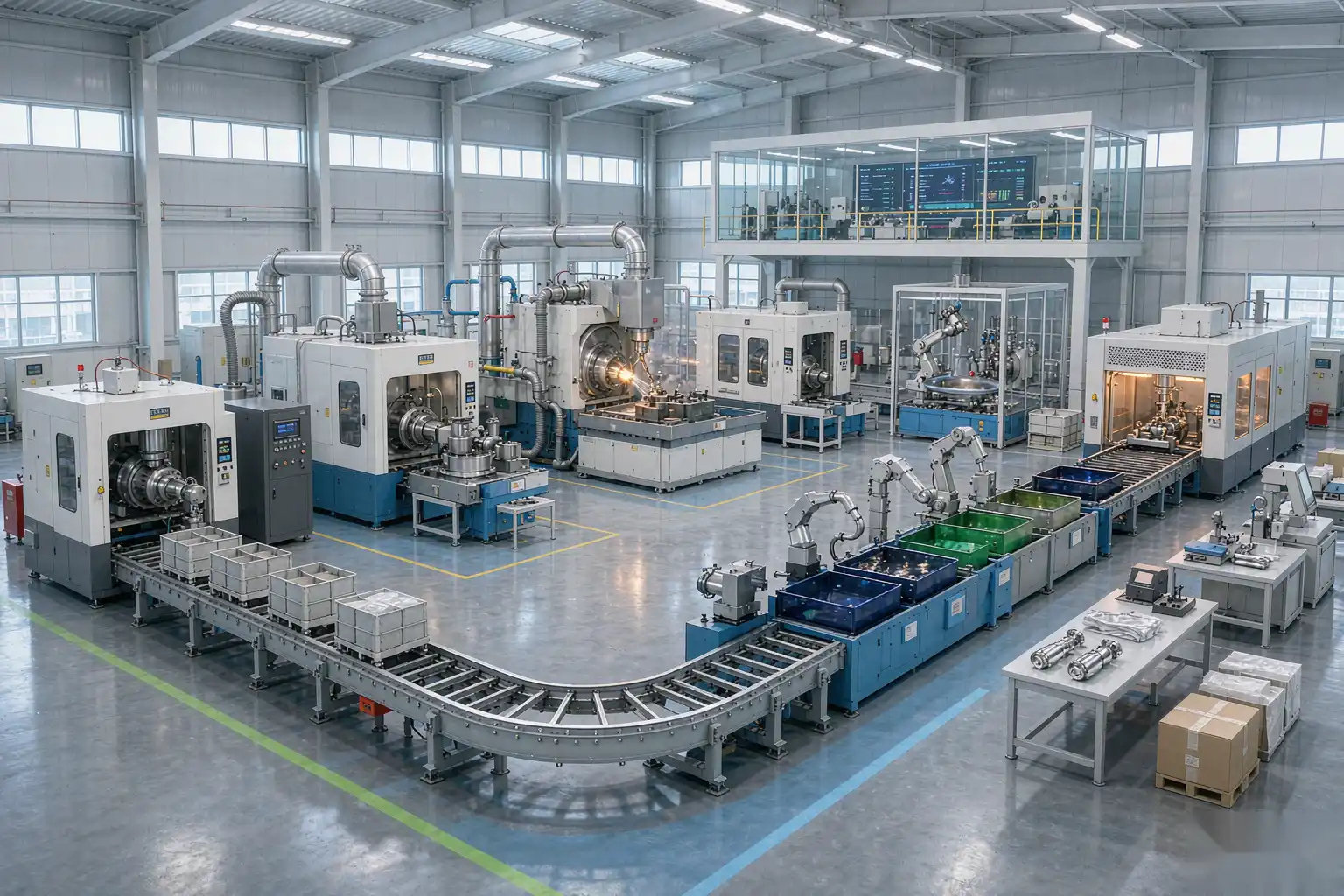
A distributor asked us to quote an “automatic faucet line” and sent a one-line brief: make it automatic. We sent it back. “Automatic” isn’t a spec — it’s a hundred decisions, and the ones you skip in design you pay for in commissioning. A line we saw in Brazil looked impressive on paper but ran at 60% of quote because the designer balanced the machines and forgot the part handling between them. The cells sat idle waiting for a body to arrive. Good line design is mostly about the boring connections nobody photographs.
This guide lists the factors that decide whether an “automatic” line actually runs.
Start With the Bottleneck, Not the Brochure
Before picking cells, measure where parts wait today. If it’s buffing, your first automation dollar goes there, not on a second CNC. A line is only as fast as its slowest manual step, so design around the real constraint. Our station overview helps map where the queue sits.
Key Design Factors
Part Handling Between Stations

This is the factor that breaks most lines. Fixtures, conveyors, and robot handoffs are half the project cost and most of the risk. Underspec them and every cell starves or blocks. Design the handoff before the cell.
Changeover for Mixed SKUs
Faucet lines run many models. If switching a body takes an hour of refixturing, your automated line loses a shift a week to setup. Design quick-change fixtures and robot programs from day one, and size each station to your highest-volume part.
Datum Consistency Down the Line
Every station should locate the part on the same datum the core set. If core shooting is consistent and CNC, grinding, and buffing all locate on that same bore, accuracy compounds. If each station invents its own datum, error accumulates.
Balanced Cycle Times
Match station takt so no cell waits on the next. A fast CNC behind a slow grinder just builds WIP. Balance the takt and the line flows; imbalance builds queues that look like throughput but aren’t.
Utilities and Footprint
Compressed air, exhaust for binders and plating fumes, cooling, and floor space are design inputs, not afterthoughts. A cell that needs exhaust you didn’t plan blocks the whole permit.
Three Design Mistakes
1. Designing cells, not the line. A collection of fast machines with weak handoffs is a slow line. Design the flow.
2. Ignoring data. Build in counting and sensing so you can see where the line stalls. A line you can’t measure, you can’t improve.
3. Over-automating the wrong end. A robot at the quiet station while hands bottleneck at buffing is money spent backwards.
Frequently Asked Questions
What’s the most overlooked factor in faucet line design?
Part handling between stations — fixtures, conveyors, robot handoffs. Buyers spec the cells and forget the connections, then the line stalls waiting for a part. Design the handoff first; it’s most of the risk.
How do I design for many faucet SKUs?
Quick-change fixtures and robot programs, sized to your top-volume body, with the slow models as fast swaps. If changeover eats an hour, automation loses a shift a week to setup.
Should I automate the whole line at once?
Usually not. Automate the real bottleneck first — often grinding or buffing — then add cells in a balanced sequence. A piece-by-piece build that stays balanced beats a big bang that stalls at the handoffs.
This guide was prepared by the application engineering team at Xiamen Dingzhu Intelligent Equipment Co., Ltd. (DZ Machinery), which designs and commissions deburring, grinding, polishing, and die-casting lines for manufacturers across more than a dozen countries. Design factors reflect typical faucet line practice; confirm exact layout against your parts, volumes, and supplier before purchase.
Tags: faucet, faucet production line, automatic faucet production, faucet manufacturing, machine selection