

AT A GLANCE · Automatic deburring versus robotic grinding is a sequencing question most growing factories face within the same budget year. Both processes remove metal, both automate well, and both vendors will tell you theirs comes first. The honest answer depends on your parts.
This comparison walks through what each process actually does, four decision criteria that settle the order for most plants, and a decision tree you can apply to your own part drawings this week.
What Each Process Actually Does
Deburring removes the small, unwanted edges left by machining, casting, or forging. Burrs are thin, hard, and located at parting lines, holes, and milled edges. The work is precise but light, measured in fractions of a millimeter.
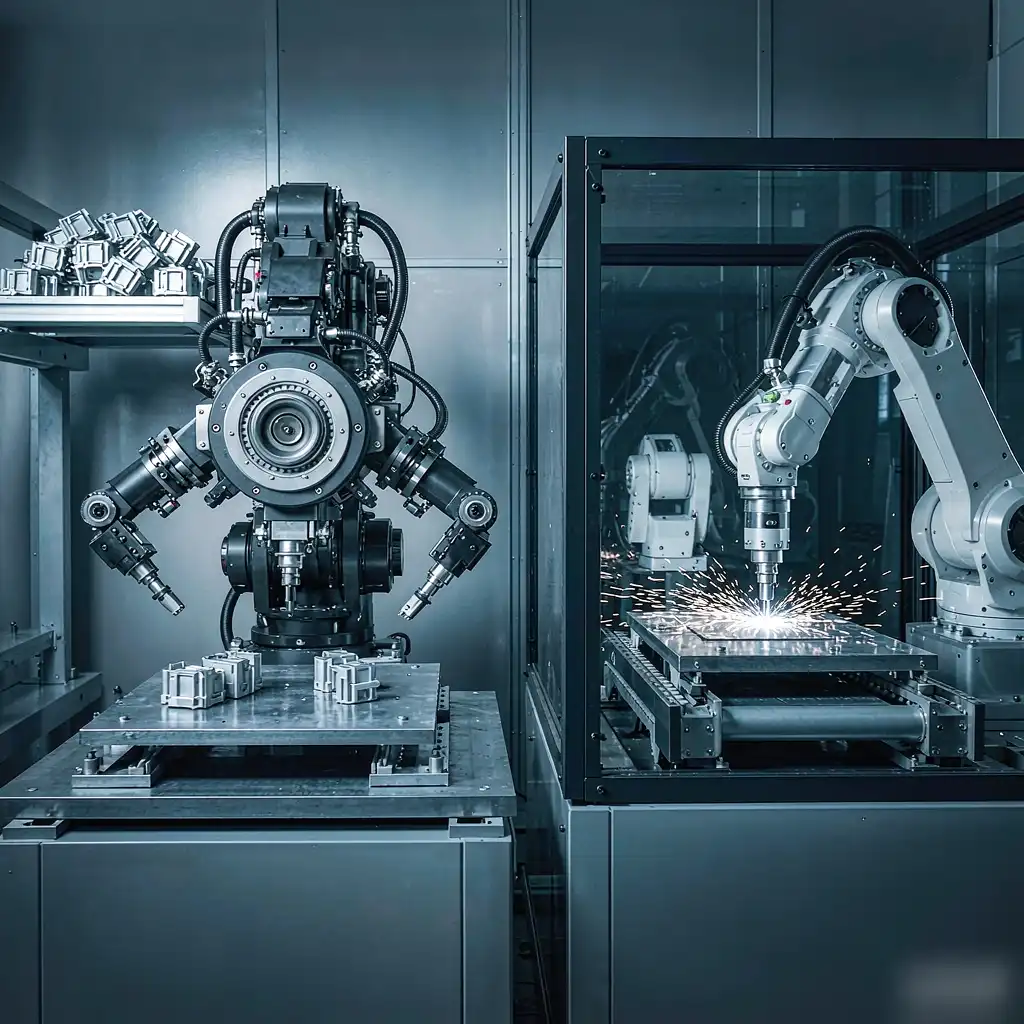
Grinding removes real material volume. It levels weld seams, blends casting skin, squares surfaces, and brings parts toward dimension. The work is heavier, generates heat and sparks, and needs rigid tooling with real power.
| Attribute | Automatic Deburring | Robotic Grinding |
|---|---|---|
| Material removed | Microscopic edges | Measurable volume |
| Tooling | Brushes, blades, compulsive tools | Grinding wheels, belts, cup wheels |
| Force profile | Light, high speed | Moderate, controlled contact |
| Typical cycle | 15 – 60 seconds | 45 seconds – 4 minutes |
| Failure mode | Burr left behind | Burn, over-grind, dimension loss |
| Skill to program | Moderate | Higher, parameter sensitive |
The table explains why the two processes rarely substitute for each other. A deburring cell cannot level a weld seam, and a grinding cell wastes its rigidity chasing parting-line flash. Most factories eventually need both, which is exactly why sequence matters.
Criterion One: Where the Defect Pain Lives
Follow your own quality data. If customer complaints and inspection rejects trace to burrs blocking assembly, scratching seals, or cutting hands, deburring pain dominates. If rejects trace to surface finish, dimensional variance, or weld appearance, grinding pain leads.
The process that removes your most expensive defect earns the first investment. One automotive supplier we know found that seventy percent of their line-stop events traced to burr-related assembly jams. Their sequence decision made itself.
Quantify the pain before the meeting. Dollars per month, not complaint counts. The process with the bigger monthly number starts first, and the case writes itself into the capital request.
Criterion Two: Which Process Your Parts Weigh Heavier
Part families lean one way or the other. Look at your drawings honestly using this sorting table.
| Part Characteristic | Leans Toward |
|---|---|
| Die castings with parting-line flash | Deburring first |
| Machined housings with cross-holes | Deburring first |
| Weldments with heavy seams | Grinding first |
| Forgings with scale and skin | Grinding first |
| Parts needing cosmetic finish | Grinding first, then polishing |
| Small precision components | Deburring first |
Count your families in each column, weighted by volume. The heavier column is your first cell. Mixed portfolios eventually need both, but the weighting tells you which one cannot wait.
Criterion Three: Automation Difficulty
Deburring automates more easily for most parts. The forces are light, the tools forgive variation, and sensing a parting line is simpler than holding a grinding dimension. A first automation project that succeeds builds the organizational confidence the second project spends.
Grinding automation rewards experience. Force control, wheel wear compensation, and heat management each need tuning that first-time teams underestimate. Starting with grinding is possible, but the ramp is longer and the odds of a painful first project are higher.
Teams with strong in-house robotics experience can start anywhere. Teams new to automation usually win by starting with the easier process and learning the basics where the stakes are lower.
Criterion Four: Payback Speed
Run both numbers. Deburring cells often pay back faster because cycles are short and labor offsets arrive quickly. Grinding cells earn more per hour but need higher utilization to justify their steeper price.
Model each cell at your real volumes using conservative inputs. The comparison in our robotic grinding machine cost and ROI analysis gives you the grinding-side framework. Build the deburring side the same way and let the payback dates compete.
When the dates are close, break the tie with criterion one. The bigger defect pain deserves the earlier fix, and the moral argument in front of the workforce matters more than a few weeks of payback difference.
The Sequencing Logic Most Plants Land On
For typical die-casting and machining operations, the sequence falls out consistently. Deburring automates first because it is easier, faster to pay back, and removes the defect that disrupts downstream assembly most.
Grinding follows within twelve to twenty-four months, once the team has run a cell through a full year of changeovers and maintenance cycles. By then, programming skills exist in-house, spares discipline is routine, and the second project avoids the first project’s mistakes.
Plants that invert the sequence, grinding first, usually have weldments or forgings dominating their mix. Their choice is equally rational. The logic is the same either way: easiest win first, harder process second, learning banked along the way.
When One Cell Does Both
Modern cells can carry both a grinding spindle and deburring tools on a changer. For mid-volume factories, one flexible cell sometimes beats two dedicated machines on both price and floor space.
The combined approach has a cost. Programs get longer, tool changes add seconds, and the maintenance schedule doubles inside one enclosure. It suits factories whose volume sits between the capacities of one and two dedicated cells.
Ask vendors to quote both architectures. The price gap surprises people in both directions, and the answer depends on your fixture count more than on the robot. For a deeper dive on the cell-versus-machine architecture question, see our robotic finishing cell versus single machine comparison.
Vendor Conversations for Each Process
The two processes attract different vendor styles. Deburring vendors tend to sell tooling packages tuned to part families, so bring drawings and volumes and expect concrete fixture proposals. Grinding vendors sell parameter capability, so bring material specs and finish requirements instead.
Prepare differently for each demo day. For deburring, watch how quickly the vendor prices your second and third part family. For grinding, watch how they handle a warped or over-stock part in the demo, because variation handling is where grinding competence lives.
Both conversations benefit from your quality data. Vendors who see your defect costs propose cells sized to the actual problem, and their quotes get sharper the same day.
A Decision Tree for Your Drawing Office
Apply four questions in order to your part portfolio. First, which process removes the most expensive monthly defect? Second, which column do your part families weigh toward? Third, does your team have automation experience? Fourth, which payback date is earlier?
Three or more answers pointing the same direction make the decision. Split answers mean the combined-cell quote deserves a serious look. Either way, the exercise takes an afternoon and replaces months of vendor-driven debate.
What the Workforce Sees in Each Choice
Floor reaction differs by process, and smart managers plan for it. Deburring automation removes tasks most workers dislike, so adoption usually runs smooth. Grinding automation replaces skilled work, which carries more emotional weight on the floor.
Honest framing helps both cases. Position the first cell as removing the worst job, and the second as expanding capacity the team could not otherwise chase. Plants that communicate this way report operators volunteering for cell training rather than avoiding it.
Involve senior operators in commissioning either way. Their process knowledge shortens the ramp, and their visible role turns skeptics into advocates. One converted grinder is worth ten posters about the future.
Case Shapes from Real Sequencing Projects
Two anonymized project shapes show the logic working. A zinc hardware foundry led with deburring: their assembly jams traced to burrs, the cell paid back in under two years, and the grinding cell followed with a team that already ran force control confidently.
A stainless weldment shop inverted the order because seam grinding dominated their quality costs. Their grinding cell ramp took longer, exactly as the difficulty criterion predicted, but the payback still landed inside three years and deburring arrived the following spring.
Both sequences worked because both followed the criteria instead of vendor enthusiasm. The order differs; the discipline does not.
Process Discipline After the Choice
Whichever cell arrives first, its performance depends on parameter discipline more than on brand. The teams that log pressures, feeds, and wear cycles get the payback their quotes promised. Our deburring process optimization tips cover the monitoring habits that keep either process healthy.
Sequencing Is Strategy
Automatic deburring versus robotic grinding is not a winner-takes-all contest. It is an ordering question, and ordering follows evidence: defect pain, part mix, team experience, and payback speed.
Run the four criteria against your own drawings this week. Write the answers down, because written criteria survive budget politics better than opinions do. The sequence that emerges will be obvious, defensible, and yours. Most importantly, the second cell will arrive already knowing what the first one learned.
Safety and guarding requirements vary by region — follow local codes and OEM guidance.