

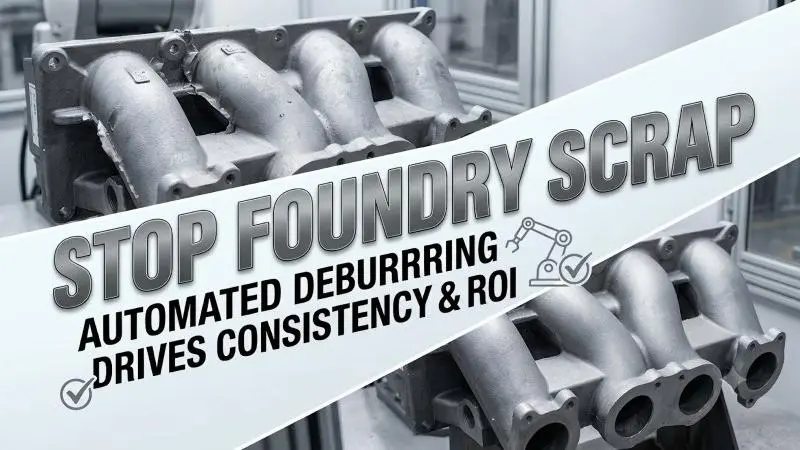
Scrap and rework in casting finishing are rarely caused by a single dramatic failure; they accumulate from inconsistent edge breaks, over-grinding at parting lines, and missed burrs that surface later at assembly or in the field. An automated deburring system attacks all three by locking process parameters and removing operator variability from the loop. The American Foundry Society notes that finishing-related defects are a leading source of internal scrap in foundries, which makes deburring automation one of the highest-ROI upgrades available.
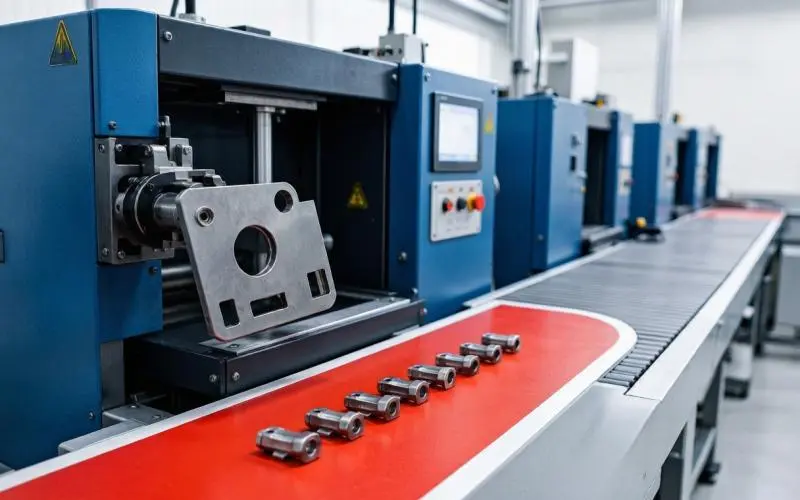
Where Scrap Comes From in Manual Deburring
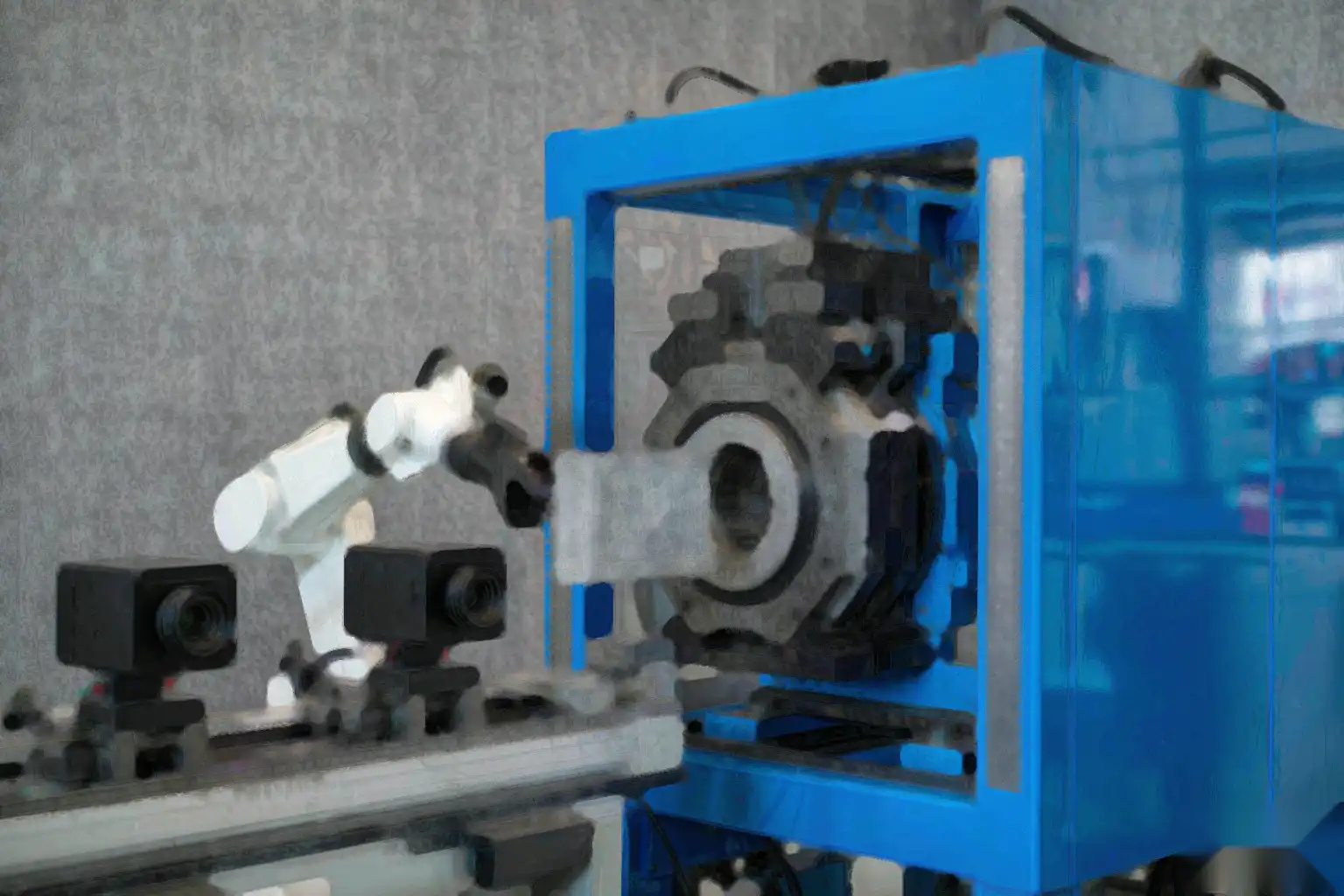
Hand deburring introduces variation: an operator tiring in the last hour of a shift applies different pressure, misses a back-face burr, or rounds an edge that should stay sharp for a seal. Each error becomes scrap or a warranty risk. A robotic deburring approach eliminates the human variance entirely.
Five Ways Automation Cuts Scrap
- Locked force parameters: servo compliance holds contact at 5–25 N, so no part is over-cut.
- 100% edge verification: vision or tactile probes reject out-of-tolerance parts before they ship.
- Tool-wear compensation: the controller slows RPM or extends dwell as brushes wear, keeping finish constant.
- Part-level traceability: every cycle is logged, so a defect batch is isolated to a window, not a whole shift.
- Consistent media: automated feed avoids the “dull tool kept too long” problem of manual benches.
Measuring the Reduction
Baseline your current scrap as a parts-per-million (ppm) or percentage figure before automation. A realistic target from a well-tuned automatic deburring machine is a 40–70% drop in finishing-related scrap within the first quarter. The scrap-reduction guide methodology applies equally to aluminum and iron.
| Factor | Manual Deburring | Automated System |
|---|---|---|
| Edge-break variation | ±0.3 mm | ±0.1 mm |
| Missed-burr rate | 1–3% | <0.2% |
| Tool-wear drift | High, unmonitored | Compensated automatically |
| Traceability | None | Per-part log |
QUICK DECISION TIP
Install a force-feedback fault counter before optimizing anything else — the fault trend tells you whether scrap is a tooling, fixture, or program problem.
ROI SNAPSHOT
A die-caster processing 400,000 aluminum parts/yr at a 2.5% finishing scrap rate (≈10,000 scrapped parts) typically recovers 5,000–7,000 parts/yr after automation, worth far more than the cell’s annual depreciation.
Implementation Checklist
Start with your worst-defect part family, not your highest-volume one. Stabilize fixturing, teach the path, then tune force and dwell using scrap data rather than guesswork. Our process optimization tips cover the tuning loop in detail.
Building the Scrap Baseline
You cannot improve what you do not measure. Before automation, sort one week of rejected parts into categories — over-grind, missed burr, dented edge, wrong radius — and weight them by cost. This Pareto tells you which defect to attack first and gives a before/after number for the business case. Revisit the sort monthly after install to confirm the trend holds.
Operator Roles After Automation
Automation does not eliminate people; it upgrades their job. The former hand-deburr operator becomes a cell tender who loads, monitors SPC, and changes media — a safer, higher-value role. Plants that retrain rather than lay off see faster adoption and fewer workarounds that quietly reintroduce scrap.
Connecting Scrap Data to Preventive Maintenance
The part-level logs from an automated cell are also a maintenance early-warning system. A rising force-feedback fault count often precedes brush failure; a creep in cycle time signals wheel loading. By tying these trends to a scheduled media change or spindle service, you stop scrap before it starts rather than discovering it in a rejected batch. This closes the loop between quality and uptime that manual benches never achieve.
The Role of Incoming Casting Quality
Automation reduces processing scrap but cannot fix a bad casting. Gate placement, die condition, and alloy control at the foundry set the baseline burr size the deburring machine must remove. Work with your molding team to stabilize flash thickness — a 0.2 mm reduction in average flash can let the cell run faster and extend media life, compounding the scrap savings automation already delivers. Finishing and foundry improvements are partners, not alternatives.
Frequently Asked Questions
How fast will scrap drop after install?
Most plants see measurable reduction in 2–4 weeks once the program and fixtures are stabilized.
Does automation help with very small burrs?
Yes; force-controlled brushes detect and remove sub-0.1 mm burrs more reliably than the human eye.
What if my parts vary in size?
Active compliance absorbs ±0.4 mm variation without reprogramming, protecting yield.
Is vision inspection necessary?
Strongly recommended for critical parts; it converts hidden scrap into a rejected-and-logged event.
Need help specifying the right machine?
Contact Xiamen Dingzhu Intelligent Equipment — we size deburring and grinding cells to your castings, volume, and tolerances. Talk to our application engineers.