

Angle Valve Polishing: How to Automate Brass Finishing
An angle valve looks simple until you finish a thousand of them. A brass valve buyer in Turkey told us his hand polishers could make one body perfect, but never a thousand identical. “The first one is a sample,” he said. “The thousandth is the product.” Angle valve polishing is exactly that problem: repeatable surface, not hero surface.
This guide covers how to automate brass angle valve polishing so the thousandth looks like the first.
Why Angle Valves Are Tricky to Polish
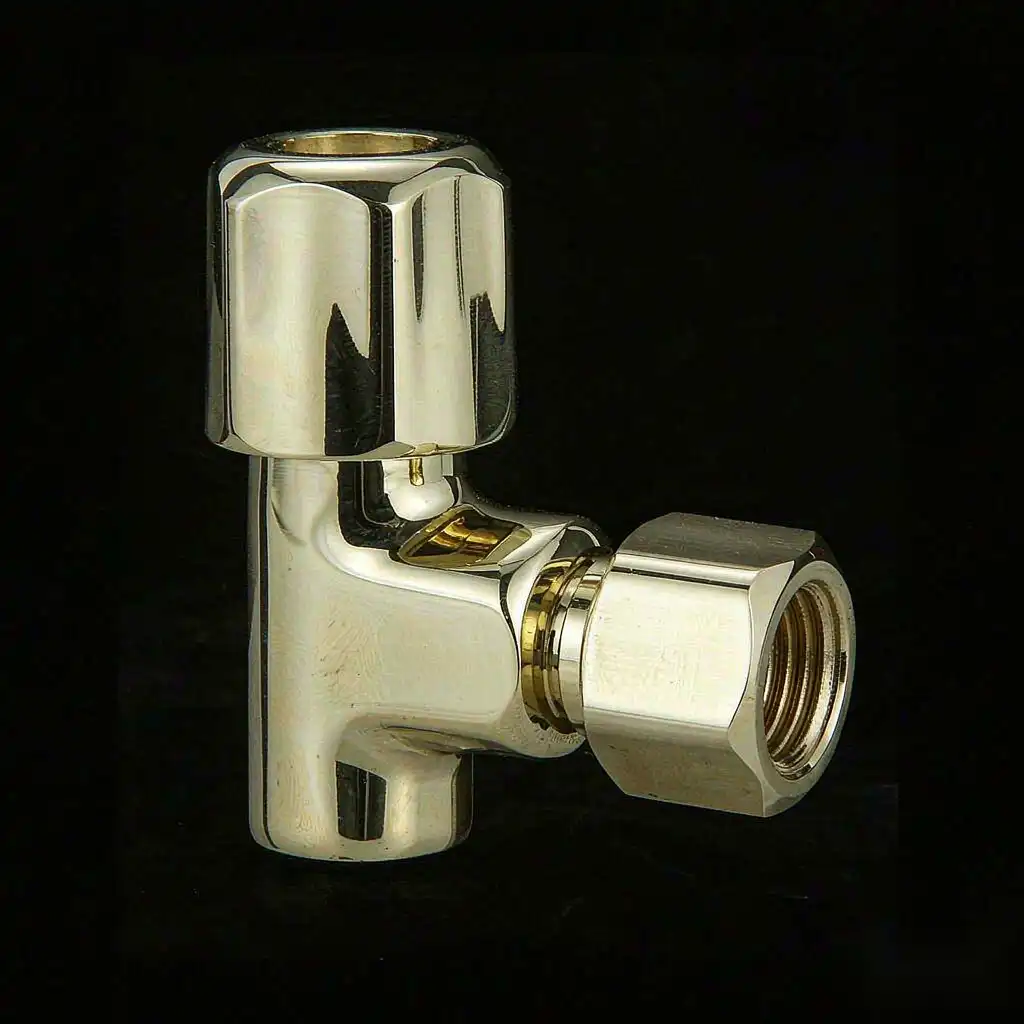
An angle valve has a bent body, a bonnet, and a handle nut — multiple surfaces at angles, with tight inside radii. Hand polishing leaves ripples and shade differences between bodies. Automating means presenting each face to the wheel at a consistent angle and force, every cycle.
How Robotic Polishing Holds the Surface
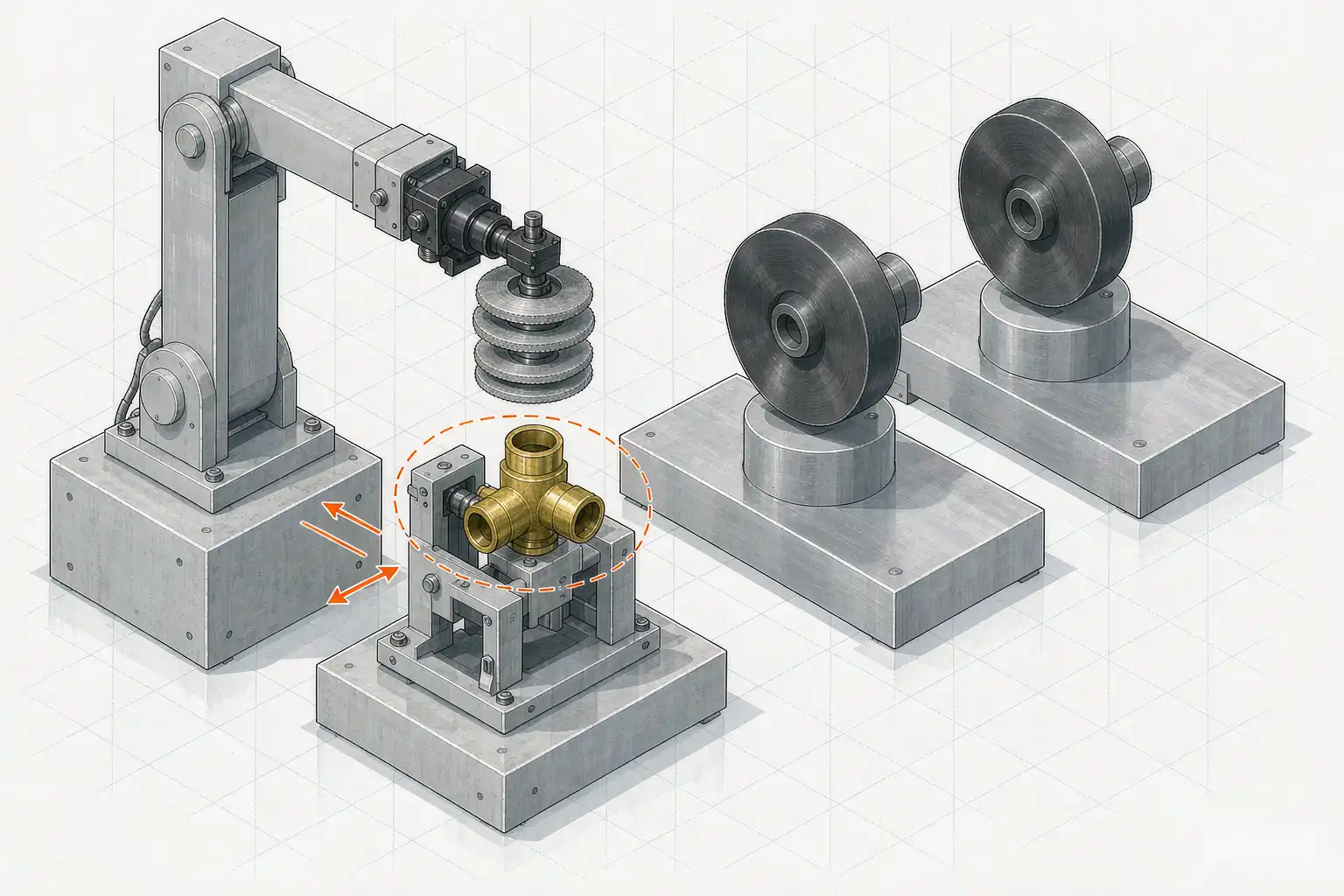
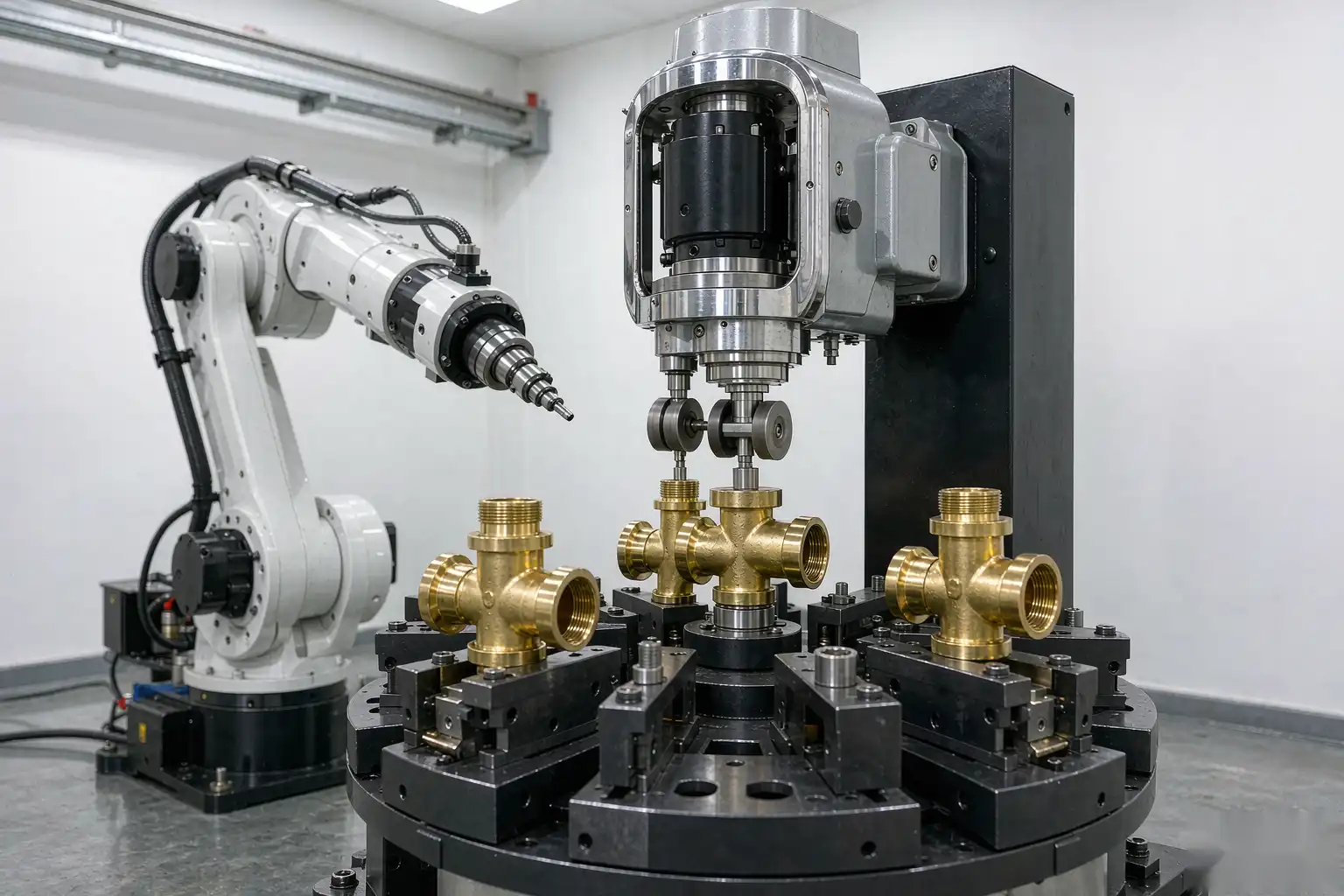
A robotic cell locates the valve on a fixed datum, rotates it to present each face, and polishes at a locked force through staged abrasives. The robot doesn’t press harder on a tough spot or ease off on an easy one, so the finish stays even. Force control is what kills the shade variation between bodies.
The same force-control principle we use on faucet buffing applies directly to valve bodies.
What Has to Be True First
Consistent Casting
Polishing only evens what it’s given. If the core drifts, the body varies and the robot chases it. Stable casting is the starting point.
Right Wheel Sequence
Brass needs staged abrasives from cut to color. A skipped stage leaves haze; an over-cut stage burns. The sequence is part of the program.
Datum and Fixture
Locate the valve on the same bore every time so the robot knows where each face is. A loose fixture forces searching, and searching is slow and uneven.
Three Mistakes Buyers Make
1. Polishing inconsistent castings. Automation amplifies a stable part and exposes a drifting one. Fix the source first.
2. Skipping force control. Fixed-path without force feedback either misses the haze or cuts through the wall. Force control holds the blend.
3. Ignoring inside radii. The tight inside corner is where hand and robot both fail first. Program the fixture rotation to reach it.
Frequently Asked Questions
Can a robot polish the inside of an angle valve?
The accessible inside radii, yes, with the right fixture rotation and small wheel. Fully blind internal bores are a machined, not polished, feature — keep expectations realistic.
Does robotic polishing match hand shine?
It matches and holds it. A skilled hand can hit a higher peak on one body; a robot hits the same shine on ten thousand. For a product line, consistency is the win.
How many angle valve shapes can one cell run?
Several, with quick-change fixtures and stored programs. Design changeover in from the start so mixed-SKU runs don’t stall the cell.
This guide was prepared by the application engineering team at Xiamen Dingzhu Intelligent Equipment Co., Ltd. (DZ Machinery), which designs and commissions deburring, grinding, polishing, and die-casting lines for manufacturers across more than a dozen countries. Finish notes reflect typical brass valve outcomes; confirm against your alloy and shine spec before purchase.
Tags: polishing, brass, valve bodies, robotic polishing, surface finishing, casting surface finishing