

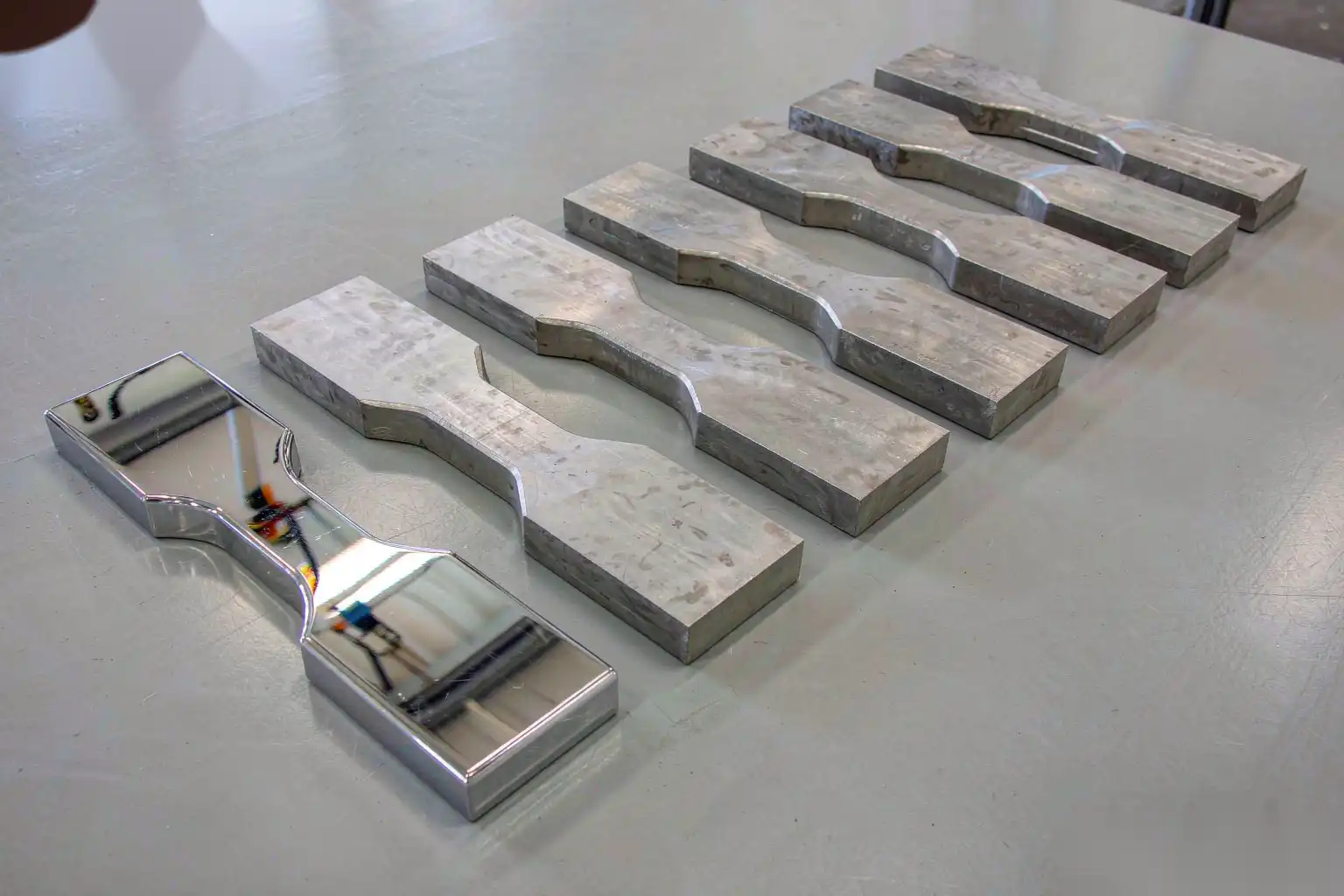
A356 vs A380 vs ADC12: Choosing a Casting Alloy by What Happens After Trim
Ask three engineers which alloy to cast a bracket in and you will get three answers based on tensile strength, because that is the column everyone memorises. It is rarely the binding constraint. A380, ADC12 and A356 all deliver enough strength for most brackets, housings and bodies. What actually decides the alloy is what the part has to survive afterwards: a T6 furnace, a machine shop with a tool-life budget, a plating line, a salt spray cabinet, or a chrome or PVD finish that shows every pore.
This article compares the three workhorse alloys on composition, castability, mechanical properties before and after heat treatment, corrosion, anodizing and plating response, machinability and tool wear, price and availability, and then gives a selection table keyed to the downstream finish.
Composition, and what each element is actually doing
| Element | A356.0 (AlSi7Mg) | A380.0 (AlSi8Cu3.5) | ADC12 (approx. AlSi11Cu2) | What it does |
|---|---|---|---|---|
| Silicon | 6.5-7.5% | 7.5-9.5% | 9.6-12.0% | Fluidity and feeding; above 12.6% is eutectic, best castability, worst machinability |
| Copper | 0.20% max | 3.0-4.0% | 1.5-3.5% | Strength, machinability and hardness; costs ductility, corrosion resistance and weldability |
| Magnesium | 0.25-0.45% | 0.10% max | 0.30% max | Heat-treat response in A356 (Mg2Si precipitation); harmful above ~0.5% in HPDC alloys |
| Iron | 0.20% max (0.15% for premium) | 1.3% max | 0.9-1.3% | Prevents die soldering; forms brittle beta-Al5FeSi plates that kill elongation and grey a polished surface |
| Zinc | 0.10% max | 3.0% max | 1.0% max | Slight strength and fluidity; raises hot-crack risk and stress-corrosion susceptibility |
| Manganese | 0.10% max | 0.50% max | 0.50% max | Converts beta-Fe needles to less harmful Chinese-script alpha phase |
| Nickel | — | 0.50% max | 0.50% max | Hot hardness; raises cost |
| Tin / Lead | — | 0.35% combined | 0.20% max | Trace; affects anodizing colour and corrosion |
| Titanium / Strontium | 0.20% Ti typical; 0.010-0.030% Sr | Ti to 0.25%; Sr rarely used | Usually unmodified | Grain refinement and eutectic modification; both raise elongation |
Three further composition limits are worth writing into the purchase specification, because they are cheaper to enforce at the ingot stage than to fix later:
- Iron below 0.15% for any polished or anodized part. Above about 0.20% Fe in a low-silicon alloy the beta-Al5FeSi platelets are visible as grey streaks after buffing.
- Copper below 0.05% and zinc below 0.10% for architectural anodize. Both elements darken and mottle the anodic film.
- Phosphorus below 10 ppm in A356 that is strontium modified. Phosphorus poisons the modifier by forming AlP, the modification fades within 30-60 minutes of holding, and the eutectic reverts to coarse plates with a measurable drop in elongation.
The two structural facts hidden in that table:
- The copper line is the corrosion, weldability and elongation line. A356 is a low-copper, low-iron alloy designed to be heat treated and to survive a corrosive environment. A380 and ADC12 are high-copper, high-iron alloys designed to run fast in a steel die without soldering.
- Iron in A380 and ADC12 is deliberate. HPDC needs 0.8-1.1% Fe so that the casting releases from the die instead of welding to it. That iron precipitates as plate-like beta intermetallics which are the reason HPDC elongation sits at 2-4% and the reason a polished A380 surface is never as bright as polished A356.
Castability index and how the three fill a die
Castability is mostly a function of distance from the eutectic composition and the freezing range.
| Measure | A356.0 | A380.0 | ADC12 |
|---|---|---|---|
| Liquidus, °C | 613-615 | 593-596 | 580-582 |
| Solidus, °C | 555-557 | 538-540 | 515-520 |
| Freezing range, °C | ~58 | ~55 | ~62 |
| Si equivalent vs eutectic | Hypoeutectic, 7% vs 12.6% | Hypoeutectic, 8.5% vs 12.6% | Near-eutectic, 11% vs 12.6% |
| Fluidity (spiral length index) | 100 (reference) | 115-130 | 130-150 |
| Hot tearing tendency | Moderate | Low | Lowest of the three |
| Die soldering tendency | High, needs coating discipline | Low | Low |
| Typical minimum wall in HPDC | 2.5-3.5 mm | 1.2-2.0 mm | 1.0-1.8 mm |
| Typical minimum wall in LP/gravity | 3-4 mm | 4-5 mm | 4-6 mm |
ADC12 is the most forgiving alloy in a difficult die: the near-eutectic composition gives the longest fluidity and the smallest solidification shrinkage (roughly 3.5-4.0% versus 6.5-7.0% for A356), so it feeds thin ribs, fills long flow lengths and resists hot tearing at sharp corners. That is why it dominates thin-wall HPDC in Asia. A356 is the opposite: it needs generous radii, good venting, and in a permanent mould it needs risers and directional solidification; in HPDC it is used rarely, mainly for structural parts where the foundry accepts a higher scrap rate in exchange for ductility.
Pouring temperature practice: 700-740°C for A380 and ADC12 in HPDC, 700-730°C for A356 in low pressure or gravity, with the die at 200-250°C for A380 and 250-350°C for A356 in a permanent mould. Running A356 too cold in a permanent mould gives cold shuts at the last fill; running it too hot grows the grain and drops elongation by 20-30%.
Mechanical properties, as-cast and after T6
| Alloy and condition | UTS, MPa | Yield, MPa | Elongation, % | Hardness HB | Shear, MPa | Fatigue (5e8), MPa |
|---|---|---|---|---|---|---|
| A356.0-F, permanent mould | 170-210 | 90-120 | 5-8 | 55-70 | 130-150 | 70-85 |
| A356.0-T6, permanent mould | 260-310 | 185-240 | 7-12 | 80-95 | 190-220 | 95-115 |
| A356.0-T6, sand cast (design min) | 205-230 | 140-165 | 5-7 | 70-80 | 165 | 80 |
| A380.0-F, die cast | 310-330 | 150-170 | 2.5-4.0 | 80-90 | 190-205 | 90-110 |
| A380.0-F, ASTM B85 minimum | 320 | 150 | 3.5 | 80 | 190 | — |
| ADC12 / AlSi11Cu2, die cast | 300-330 | 150-170 | 1.5-3.5 | 80-95 | 185-200 | 85-105 |
| ADC12 after 180°C x 4 h stabilisation | 290-315 | 155-175 | 1.5-3.0 | 85-95 | 185 | — |
The comparison engineers usually get wrong: as-cast A380 has a higher tensile strength than as-cast A356. Copper and the fine HPDC microstructure buy that. A380 loses on elongation, on heat-treated strength, and on property consistency through a thick section. Once A356 is T6 treated it passes A380 on yield strength by 20-50% and on elongation by a factor of three, which is the real reason structural castings are A356 and not A380.
A380 and ADC12 cannot be solution treated to a T6 temper. Two reasons: the entrained gas porosity in an HPDC part blisters at the solution temperature, and the copper-rich phases begin to coarsen. What is available instead is a low-temperature stabilisation, typically 180-230°C for 2-6 h, which relieves stress, stabilises dimensions for machining, and slightly raises hardness at the cost of a little elongation. If a drawing calls for A380-T6, the drawing is wrong and should be corrected before the tool is cut.
One more design caution on A356: T6 properties are measured on a separately cast test bar with a controlled quench. A production casting with a 25 mm section will not reach the same numbers. Specify properties at a named location in the casting with a coupon-cutting plan, not on the datasheet.
Corrosion behaviour
Corrosion resistance tracks copper and iron almost linearly.
| Condition | A356-T6 | A380-F | ADC12-F |
|---|---|---|---|
| ASTM B117 neutral salt spray, bare, 500 h | Light general staining, no pitting to depth | Pitting, 0.2-0.6 mm depth, dark staining | Pitting, 0.3-0.8 mm depth, extensive staining |
| ASTM B117, chromate conversion plus powder coat, 1000 h | Creep under 1 mm from scribe | Creep 1-3 mm from scribe | Creep 2-4 mm from scribe |
| Intergranular / exfoliation susceptibility | Low | Moderate | Moderate to high |
| Galvanic compatibility with steel fasteners | Good with isolation | Poor, needs isolation | Poor, needs isolation |
| Stress corrosion cracking | Low, especially T6 with low Cu | Moderate | Moderate |
The mechanism is galvanic: copper-rich interphases and iron-rich intermetallics are cathodic to the aluminium matrix, so each particle drives local dissolution of the surrounding matrix and a pit starts. With 3-4% copper in A380, there are a lot of cathodic sites. A356 with 0.2% maximum copper and 0.15% iron has very few, which is why marine hardware, water meter bodies and exterior architectural castings are specified in A356 or in an Al-Mg alloy.
There is one failure mode worth spelling out because it is frequently misdiagnosed as a coating defect. A die casting has a network of shallow pores connected to the surface, and a liquid pretreatment or an electrocoat bath wicks into them. If the parts are not fully dried or if the cure is too fast, that trapped electrolyte later bleeds out through the film and shows as a white bloom or a staining ring weeks after the parts passed inspection. The fix is process, not paint: a thorough deoxidise and desmut, a hot rinse above 60°C, complete drying before coating, and a slower ramp into the cure so the surface pores are sealed by the film rather than burst through it.
Practical mitigations, in order of effectiveness: alloy change to A356 or an Al-Mg casting alloy; proper coating system with conversion pretreatment (zirconium or titanium-based, or chromate where permitted), a primer and a topcoat; anodic or plasma electrolytic oxidation; and cathodic protection for immersed service. Seal porosity before coating, because a pore that holds electrolyte becomes a corrosion cell under the film.
Anodizing, polishing and plating response
This is where the alloy choice becomes visible to the end customer.
| Finish | A356-T6 | A380-F | ADC12-F |
|---|---|---|---|
| Sulphuric anodize, clear | Uniform grey-silver, 8-20 µm, acceptable | Dark grey, blotchy, mottled | Dark grey to black, blotchy |
| Sulphuric anodize, black dye | Deep, even black at 10-15 µm | Uneven black, brownish cast | Patchy, often rejected |
| Hard anodize, 40-60 µm | Achievable, 400-500 HV | Poor, burns at high current density | Poor |
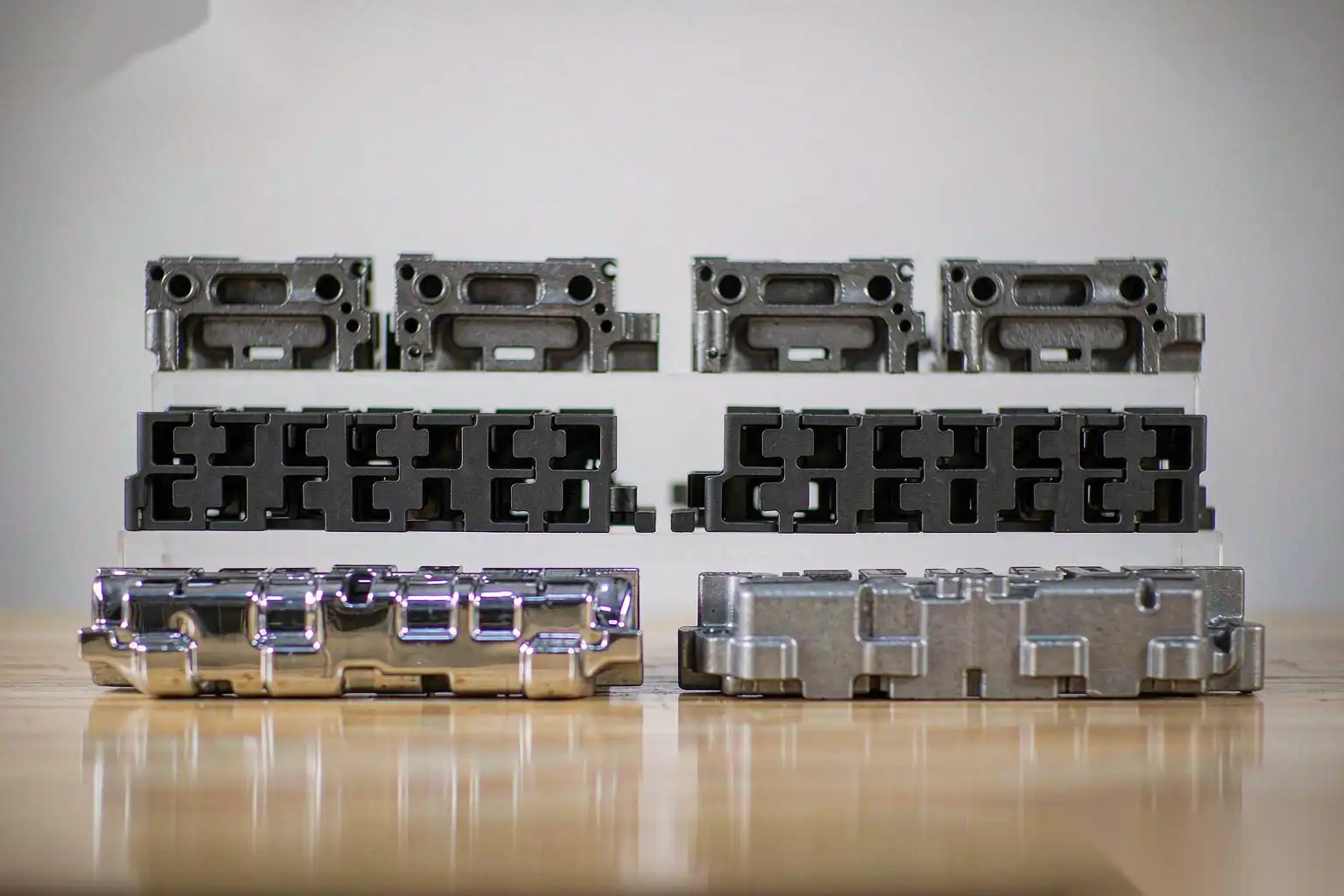
| Mechanical mirror polish | Reaches Ra 0.02-0.05 µm, bright | Reaches Ra 0.05-0.15 µm, greys under load | Greyish, Si particles smear |
| Chrome or PVD over copper-nickel | Standard for sanitary | Possible but requires heavy copper build | Poor, high reject rate |
| Powder coat | Excellent | Excellent, with outgas pre-bake | Excellent, with outgas pre-bake |
| Electrophoretic / e-coat | Excellent | Good | Good |
Why the difference: silicon does not anodize. In a 7% Si alloy the silicon phase is essentially inert in the anodizing bath, so the film grows only over the aluminium matrix and the surface comes out grey. In an 11% Si alloy with 2-3% copper the effect is much stronger and the copper additionally dissolves and redeposits, giving the muddy brown-black cast. Iron does the same thing. That is why decorative anodized castings are A356-class or an Al-Mg alloy, and why castings with a cosmetic anodize requirement are frequently specified with iron below 0.15% and copper below 0.05%, which is a premium melt.
For polish-and-plate work, the sequence is grind at 180-320, cut buff with a sisal or treated cotton wheel and a tripoli compound at 25-35 m/s peripheral speed, colour buff with a loose cotton wheel and a white or green rouge at 30-40 m/s, alkaline clean, zincate, cyanide-free copper strike, then 15-30 µm of bright copper, 10-20 µm of semi-bright or bright nickel, and 0.3-1.0 µm of chromium or a PVD topcoat. A356 takes that with a single cut-and-colour pass. A380 usually needs an extra copper build and a buff in between, which adds 15-25% to the plating cost and still leaves a higher reject rate on surface pits.
Machinability and tool wear
| Factor | A356-T6 | A380-F | ADC12-F |
|---|---|---|---|
| Relative tool life vs 6061-T6 = 100 | 55-75 | 25-40 | 20-35 |
| Recommended carbide grade | Sharp, polished, positive rake, uncoated or TiB2 | Fine-grain WC-Co, 6-10% Co, sharp edge | Same as A380 |
| PCD benefit | Moderate | Large, 8-15x carbide life | Large, 10-20x carbide life |
| Cutting speed, carbide, m/min | 250-500 | 200-400 | 180-350 |
| Cutting speed, PCD, m/min | 500-900 | 400-800 | 400-700 |
| Typical achievable Ra, µm | 0.8-1.6 | 1.2-2.5 | 1.6-3.2 |
| Chip form | Continuous, needs breakers | Short, fragmented | Short, fragmented |
| Built-up edge risk | Moderate, especially T6 at low speed | Low | Low |
The abrasive species are primary and eutectic silicon (600-900 HV) and, in the high-iron alloys, the Al-Fe-Si intermetallics. ADC12 at 11% Si is the most abrasive of the three; A380 at 8.5% Si sits in the middle; A356 at 7% Si with strontium modification has a fine fibrous eutectic that is much less aggressive. The flip side is that the low-silicon alloy is gummier, so it is more prone to built-up edge at low cutting speeds and needs sharper edges and better chip evacuation.
Two practical rules that save money. First, if you are drilling more than about 20,000 holes per year in A380 or ADC12, PCD or a diamond-coated drill pays back inside a year on tool cost alone, before counting the cycle-time gain from running 600-900 m/min. Second, do not machine away the casting skin on A356 if the fatigue case matters: the as-cast surface is fine-grained and slightly stronger, and the sub-surface porosity at 0.5-2.0 mm depth is worse than at the surface.
Tapping deserves its own note, because it is where high-silicon alloys generate the most avoidable scrap. In A380 and ADC12 the short, fragmented chip packs the flute of a cut tap in a blind hole, and the failure is a broken tap inside a part that already carries casting and machining value. Use a high-helix or spiral-point tap with through-tool coolant, keep the thread engagement at 2.0-2.5x diameter rather than the 3x common in steel, and hold the pre-hole diameter to the upper half of the tap drill range on high-silicon alloys. Roll-form taps work well in A356-T6 and in low-silicon Al-Mg casting alloys, where elongation above 5% lets the material flow into the thread form and cold-work, giving 20-40% higher pull-out strength than a cut thread in the same hole; they are not usable in ADC12 without trial, because the lobes crack and the tool welds. Whichever route is chosen, put the installation torque and the proof torque on the drawing, and re-check both after any alloy or heat-treat change, since the torque-tension relationship moves with hardness.
Price, availability and scrap value
| Factor | A356.0 | A380.0 | ADC12 |
|---|---|---|---|
| Ingot premium over LME primary aluminium | +0.15 to +0.45 USD/kg | +0.05 to +0.25 USD/kg | +0.00 to +0.20 USD/kg |
| Secondary (recycled) content typical | 20-60% | 70-100% | 90-100% |
| Availability | Global, standard | Global, standard | Dominant in Asia; A383/384 elsewhere |
| Melt and processing control burden | Higher: Sr modification, grain refiner, low Fe discipline | Low | Lowest |
| In-house returns recovery | Clean, low-iron returns must be kept segregated | Easy, tolerant | Easy, tolerant |
| Scrap sensitivity to iron pickup | High; one dirty charge ruins a heat | Low | Low |
A356 costs more per kilogram for two reasons: the specification limits on iron, copper and zinc force a higher-grade charge, and the melt treatment (grain refiner, strontium modification, tighter degassing) adds handling and consumables. Expect 0.15-0.45 USD/kg above A380 at the ingot level, before the heat treatment cost, which adds another 0.35-0.90 USD/kg. But a part that would otherwise be impregnated, re-machined or rejected is cheaper in A356; the alloy premium is a fraction of the cost of one per cent of scrap on a plated part.
Segregation is the operational trap. If a plant runs both A356 and A380, any A356 return that goes into the A380 stream is lost value and any A380 return that goes into the A356 stream is a chemistry violation. Physical separation of returns by alloy, labelled bins and a spectrographic check on every heat are not optional.
Selection table by downstream requirement
| Downstream requirement | Recommended alloy | Reason |
|---|---|---|
| Chrome, PVD or bright decorative finish | A356 or low-Fe Al-Mg | Mirror polish and a clean plating surface |
| Black or clear anodize, cosmetic | A356-T6, low Fe and Cu | Only one that anodizes evenly |
| Hard anodize above 25 µm | A356-T6 | High Si and Cu burn |
| Powder coat, any colour | A380 or ADC12 | Cheapest, finish hides the surface |
| T6 strength or 7%+ elongation | A356-T6 | Heat-treatable; the others are not |
| Pressure tightness above 10 bar | A356-T6 in LP or gravity | Low gas, fine pore population |
| Weld repair or welded assembly | A356 | Low copper; the others crack |
| Thin wall under 1.5 mm, long flow | ADC12 | Best fluidity and lowest shrinkage |
| High volume, low cost, non-cosmetic | A380 or ADC12 | Fastest cycle, lowest alloy cost |
| Marine or exterior corrosive service | A356-T6, or Al-Mg 5xxx cast | Copper drives pitting |
| Heavy drilling and tapping | A380 | Better chip breaking and tool life than A356 at volume, and cheaper |
| Structural automotive node with crash load | A356-T6 or A357-T6 | Elongation and consistency |
What the alloy means for the finishing cell
Alloy changes the abrasive budget and the cycle time on every abrasive station downstream, which is why an automated cell has to be specified with the alloy named. A356 with strontium modification is softer and cuts faster: a belt that survives 8,000-12,000 cycles on A356 may last only 4,000-6,000 on ADC12, and the contact pressure that produces a clean cut on A380 will under-cut and round an edge on A356. The buffing compounds differ as well: A356 needs a lighter cut compound because the surface is already fine, while A380 needs an aggressive first cut to level the silicon particles before the colour pass.
The gate and parting-line geometry is the same regardless of alloy, so the cell architecture is the same; what changes is the consumable set, the spindle load and the compensation rate for media wear. In practice that means the following have to be re-tuned whenever a plant switches alloy on an existing cell:
- Contact pressure. A380 needs 20-40 N to cut cleanly; the same pressure on A356 rounds edges and leaves a wavy surface. Drop to 10-25 N for low-silicon alloys.
- Belt and buff life. Expect 4,000-6,000 cycles per belt on ADC12 against 8,000-12,000 on A356 at the same removal, and re-set the wear compensation step accordingly.
- Compound grade and feed. A356 takes a lighter cut compound at a lower feed rate; A380 needs an aggressive first cut to level the silicon particles before the colour pass or the finish greys under chrome.
- Dust extraction. High-silicon swarf is far more abrasive to ductwork and filter media; specify abrasion-resistant bends and a higher filter area for ADC12 and A380.
- Cycle time and robot load. High-silicon alloys run a higher spindle load and a slower feed, typically 10-25% longer cycle per stage. DZ Machinery specifies its robotic grinding and polishing cells with the alloy written into the cycle-time study for exactly this reason, and the same applies to the dust extraction design, since high-silicon swarf is more abrasive to ductwork and filtration than low-silicon swarf. More background on the surface side is in our die casting surface finish standards reference.
DZ Machinery builds robotic deburring, grinding and polishing cells and complete turnkey finishing lines for aluminium castings, with the fixture, media, compound and dust extraction all sized to the alloy you actually run. Send us the part drawing, the alloy, the required finish class and the annual volume, and our engineering team will return a cycle time, a consumable cost per part and a labour comparison against your current manual stations.