


Marine Hardware Polishing: Fight Corrosion with Automation
A boat hardware maker on the Adriatic lost a season of orders to salt bloom — the hand-polished cleats looked bright in the crate and pitted at the dock. “We sold shine,” the owner said, “and delivered a surface the sea ate in a month.” Marine hardware polishing is a corrosion job first and a looks job second: a smooth, even, passive surface is what actually resists salt. That is where automation wins.
This guide covers how to automate marine hardware polishing so the finish resists corrosion instead of just hiding it.
Why Marine Finishing Is Different
Saltwater finds every scratch, seam line, and dull patch. A hand finisher leaves exactly those — uneven pressure at the edges, haze in the curves, a seam line the eye misses and the sea finds. The corrosion starts there. The surface has to be uniform and defect-free, not just bright.
How Robotic Polishing Holds the Surface
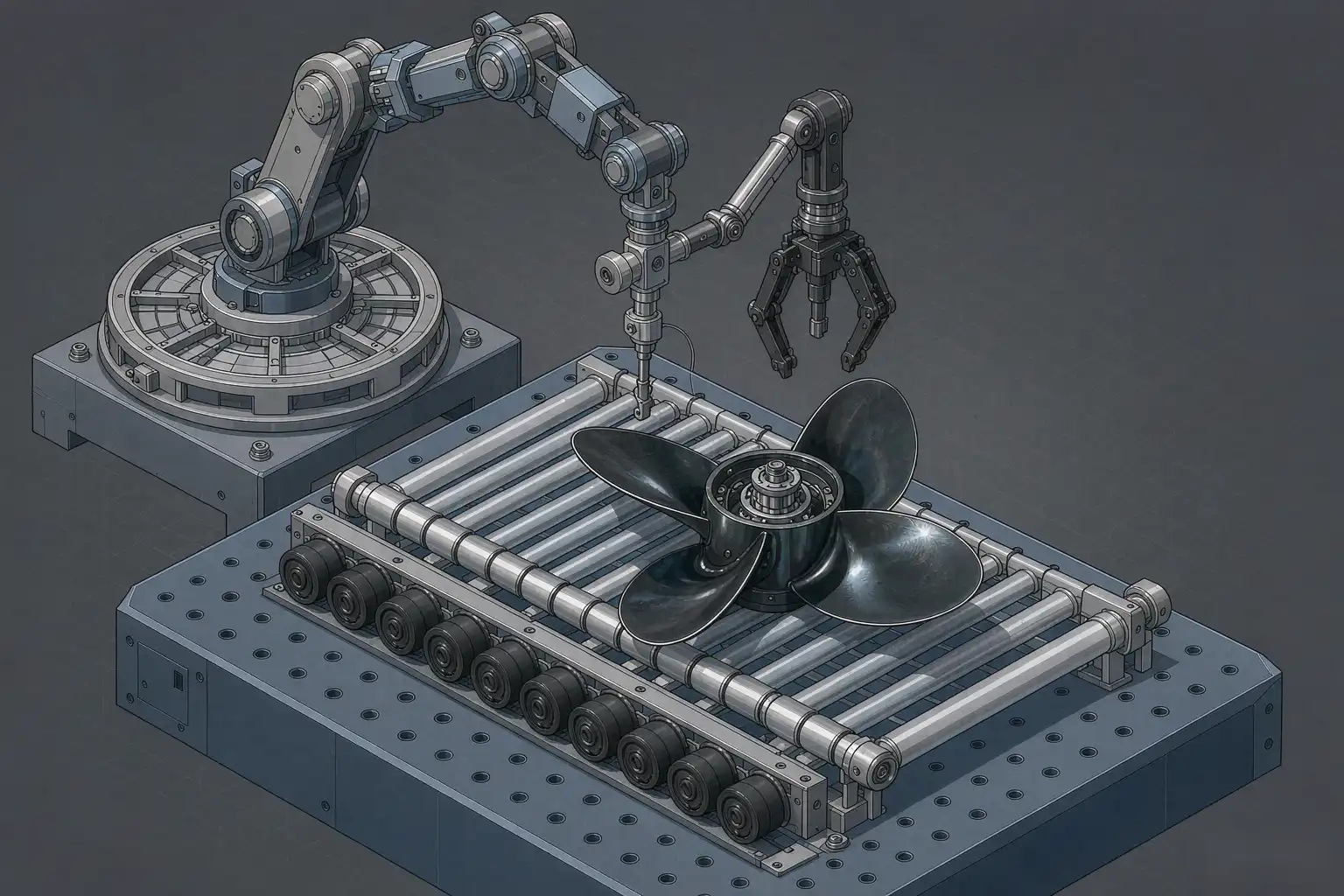
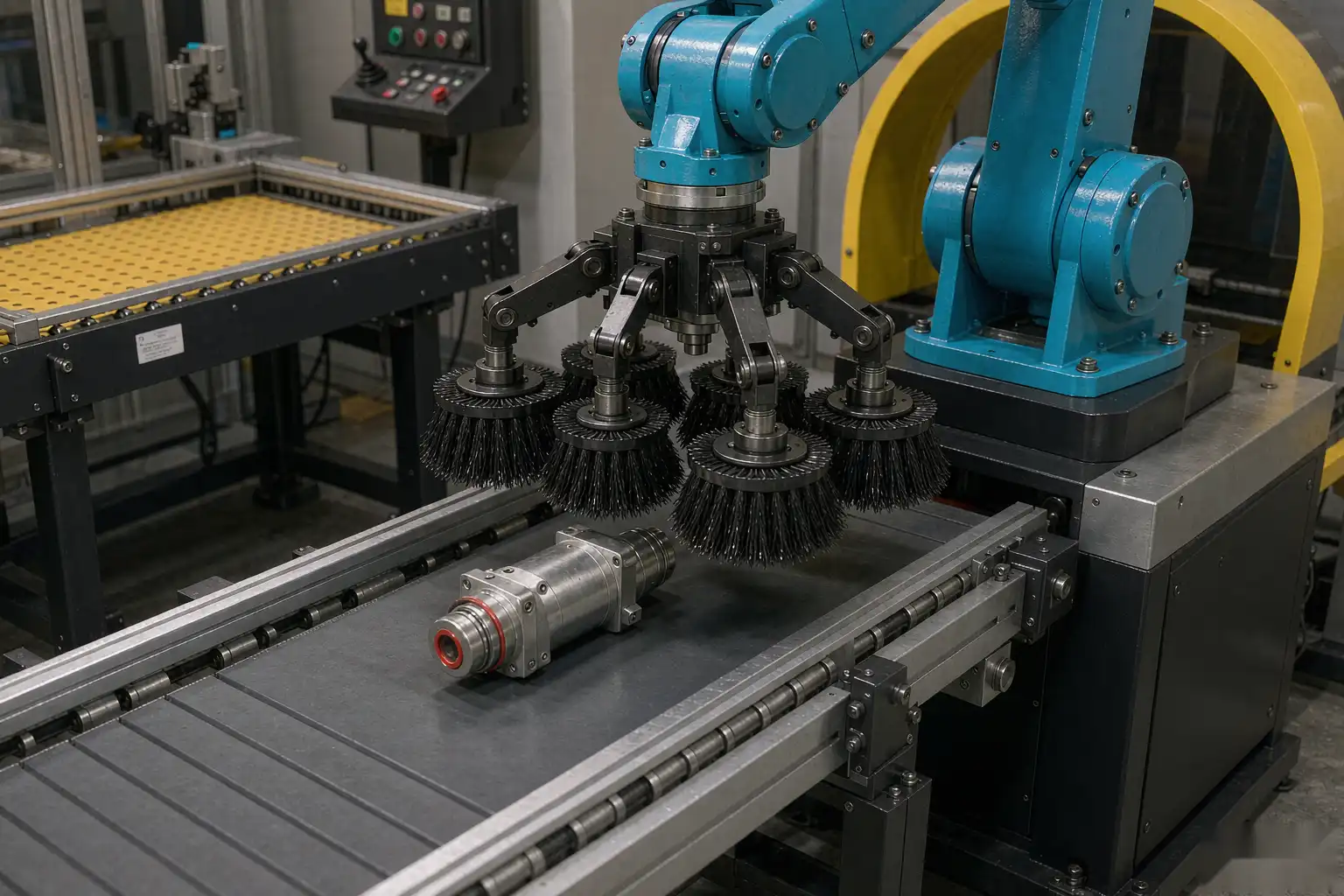
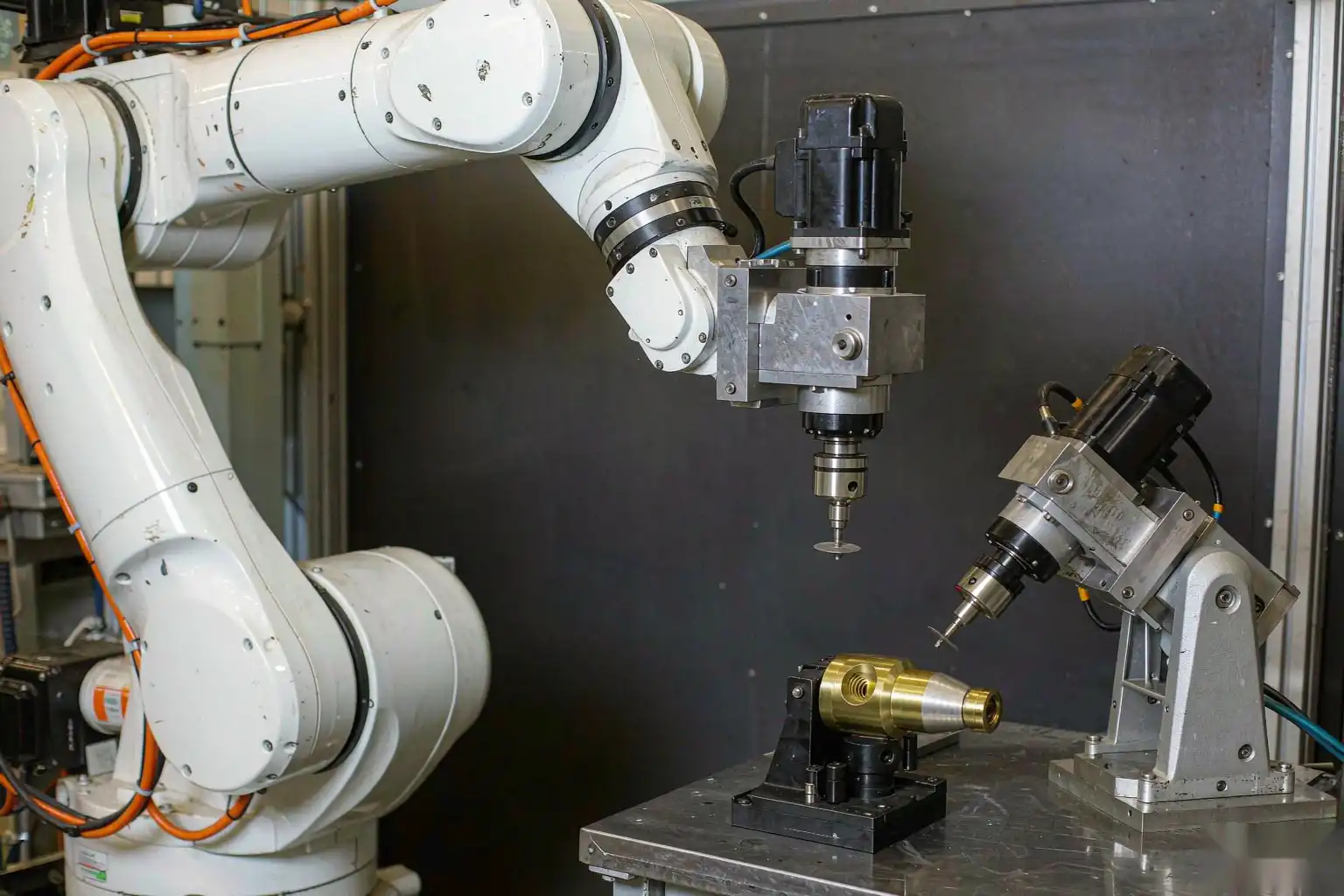
A robotic cell locates each part on a fixed datum and presents it to staged wheels at locked force, sweeping the same even path every cycle. Force control is what keeps the curves bright instead of dark-at-center. The result is a smooth, uniform surface that passivation actually takes to — which is what marine grade needs. The same even-curve logic we use on impeller polishing applies here, just on a fitting instead of a blade.
Even surface is the whole point, and it is the same discipline we apply on flange finishing for a uniform face.
What Has to Be True First
Good Casting
Polishing only evens what it is given. If the casting is porous or the datum drifts, the robot chases it and the surface stays uneven. Stable casting first.
Passivation After Polish
Polish creates the smooth surface; passivation builds the corrosion film. Automate the handoff so the bright part goes straight to passivation before it is handled.
Locked Force
Fixed-path without force feedback leaves the center dark and the rim bright. Force control holds the whole part even, which is what salt water tests.
Three Mistakes Buyers Make
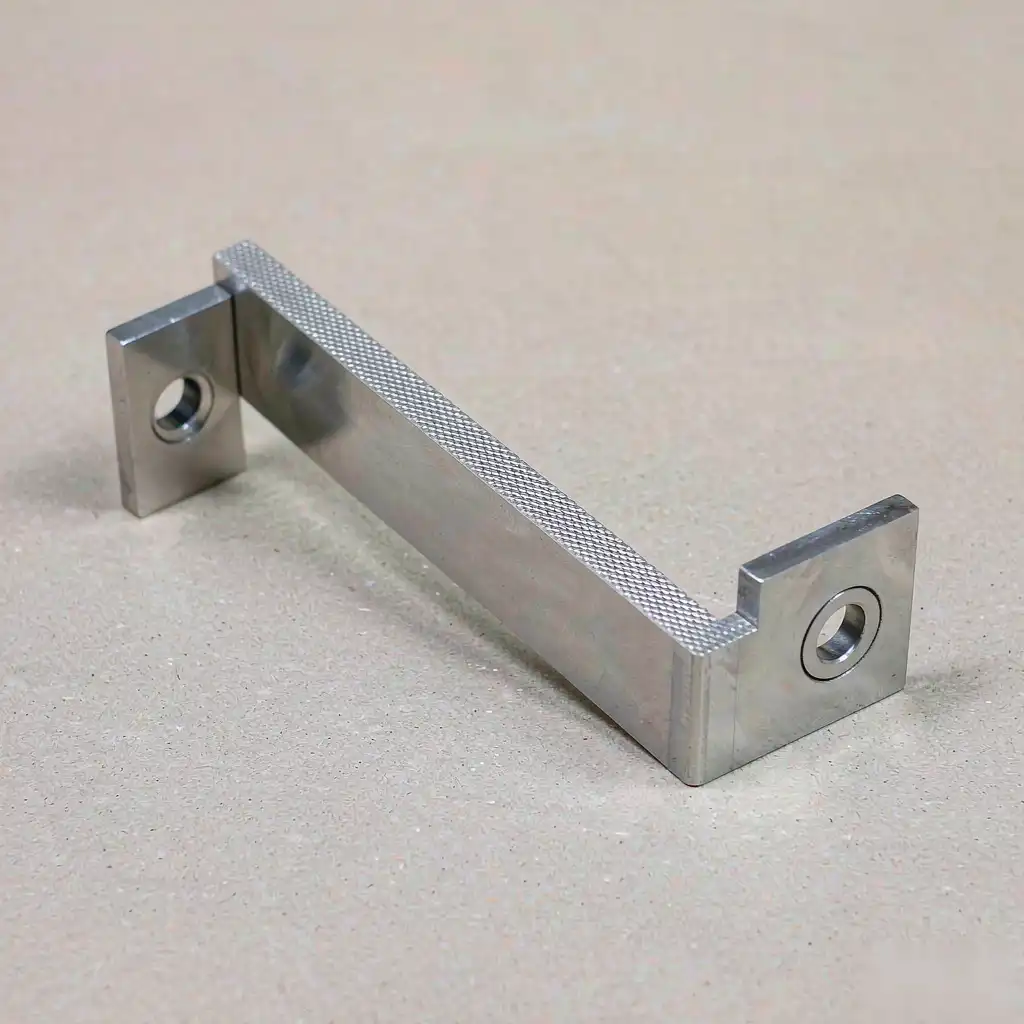
1. Polishing inconsistent castings. Automation exposes a porous surface. Fix the source first.
2. Skipping passivation. A bright, unpassivated part still corrodes. Build the polish-to-passivation handoff into the cell.
3. Ignoring the curves. The corners and inner radii are where salt sits. Program the path to cover them, not just the flat faces.
Frequently Asked Questions
Does robotic polishing really help corrosion, or just looks?
It helps both. A uniform, defect-free surface is what passivation bonds to; hand haze leaves the weak spots the sea finds. Evenness is the corrosion defense.
Which alloys suit automated marine polishing?
316 stainless and similar marine grades take it best. The smoother the base finish, the less the robot has to remove and the more even the result.
How many part shapes fit one cell?
Several, with quick-change fixtures and stored programs. Design changeover in so mixed hardware runs do not stall the cell.
This guide was prepared by the application engineering team at Xiamen Dingzhu Intelligent Equipment Co., Ltd. (DZ Machinery), which designs and commissions deburring, grinding, polishing, and die-casting lines for manufacturers across more than a dozen countries. Finish notes reflect typical marine hardware outcomes; confirm against your alloy and corrosion spec before purchase.
Tags: polishing, robotic polishing, stainless steel, corrosion, corrosion protection, surface finishing