

A380 Aluminum Alloy: Properties, Die Casting Behavior, and Where It Works Best
A380 in 90 Seconds
A380 (UNS A13800) is the default die casting aluminum alloy in North America, equivalent to ADC12 in Japan and EN AC-46500 in Europe. It was developed in the 1970s specifically for high-pressure die casting, optimized for:
- Excellent fluidity (fills thin walls and complex geometry)
- Low hot-tearing tendency
- Good as-cast mechanical properties without heat treatment
- Resistance to die soldering (less die wear)
- Low cost — uses up to 20% recycled content without property loss
If a part drawing says “die cast aluminum” with no further specification, the supplier is almost certainly going to quote A380. Whether that is the right choice is a different question.
A380 Chemical Composition

The nominal composition of A380:
| Element | Range (wt%) | Function |
|---|---|---|
| Silicon (Si) | 7.5–9.5 | Improves fluidity, reduces shrinkage |
| Copper (Cu) | 3.0–4.0 | Improves strength and machinability |
| Iron (Fe) | 0.7–1.1 | Reduces die soldering (intentional) |
| Magnesium (Mg) | 0.10–0.30 | Minor strengthening |
| Manganese (Mn) | 0.20–0.50 | Controls iron morphology |
| Zinc (Zn) | ≤2.9 | Residual, no functional role |
| Nickel (Ni) | ≤0.5 | Residual |
| Others | ≤0.5 | Each element |
| Aluminum (Al) | Balance | Base |
The 8% silicon makes A380 a hypoeutectic Al-Si alloy — close to but below the eutectic point (12.6% Si). This gives it a good balance of fluidity and mechanical properties. The 3-4% copper is the key strengthening element, but it also reduces corrosion resistance.
A380 Mechanical Properties (As-Cast, Die Cast)
Typical properties you can expect from a well-run die casting:
| Property | Value |
|---|---|
| Ultimate Tensile Strength | 320–360 MPa (46,500–52,000 psi) |
| Yield Strength (0.2% offset) | 160–180 MPa (23,000–26,000 psi) |
| Elongation at break | 3.0–3.5% |
| Hardness (Brinell) | 75–85 HB |
| Shear Strength | 190–210 MPa |
| Fatigue Strength (5×10⁸ cycles) | 130–150 MPa |
| Density | 2.71 g/cm³ |
| Thermal Conductivity | 96–110 W/m·K |
| Electrical Conductivity | 23–27% IACS |
| Modulus of Elasticity | 71 GPa |
These are typical as-cast values. A380 is not heat-treatable in the conventional sense (the T6 cycle causes blistering due to gas porosity), so the as-cast condition is what you get in production.
How A380 Compares to Other Common Die Casting Alloys
A380 vs A383 (ADC10+)
A383 has slightly higher copper (3.0-4.0% vs 2.0-3.0% in some specs) and similar silicon. A383 is specified when pressure tightness matters — pump housings, hydraulic valve bodies, gear cases. Marginal cost premium over A380.
A380 vs A384 (ADC12+)
A384 has lower copper (≤0.20%) and slightly higher silicon. A384 is used when you need better thermal cycling stability — components that heat and cool repeatedly, like engine covers near heat sources.
A380 vs A390
A390 is a hypereutectic alloy with 16-18% silicon. Very hard (120 HB), very wear-resistant, but very difficult to machine. A390 is used for engine blocks, cylinder liners, and wear surfaces — not for general die cast parts.
A380 vs A413 (A-S12)
A413 has higher silicon (11-13%) and very low copper. A413 is the alloy for pressure-tight parts — water meters, pump bodies, pneumatic components. Lower strength than A380, but excellent for hermetic sealing.
A380 vs 6061 (Wrought Aluminum)
A common confusion: 6061 is a wrought alloy (extruded, rolled, forged), not a die casting alloy. You cannot die cast 6061 economically. If a drawing says 6061 but the manufacturing process is die casting, the spec is wrong.
Where A380 Performs Well
A380 is the right choice for:
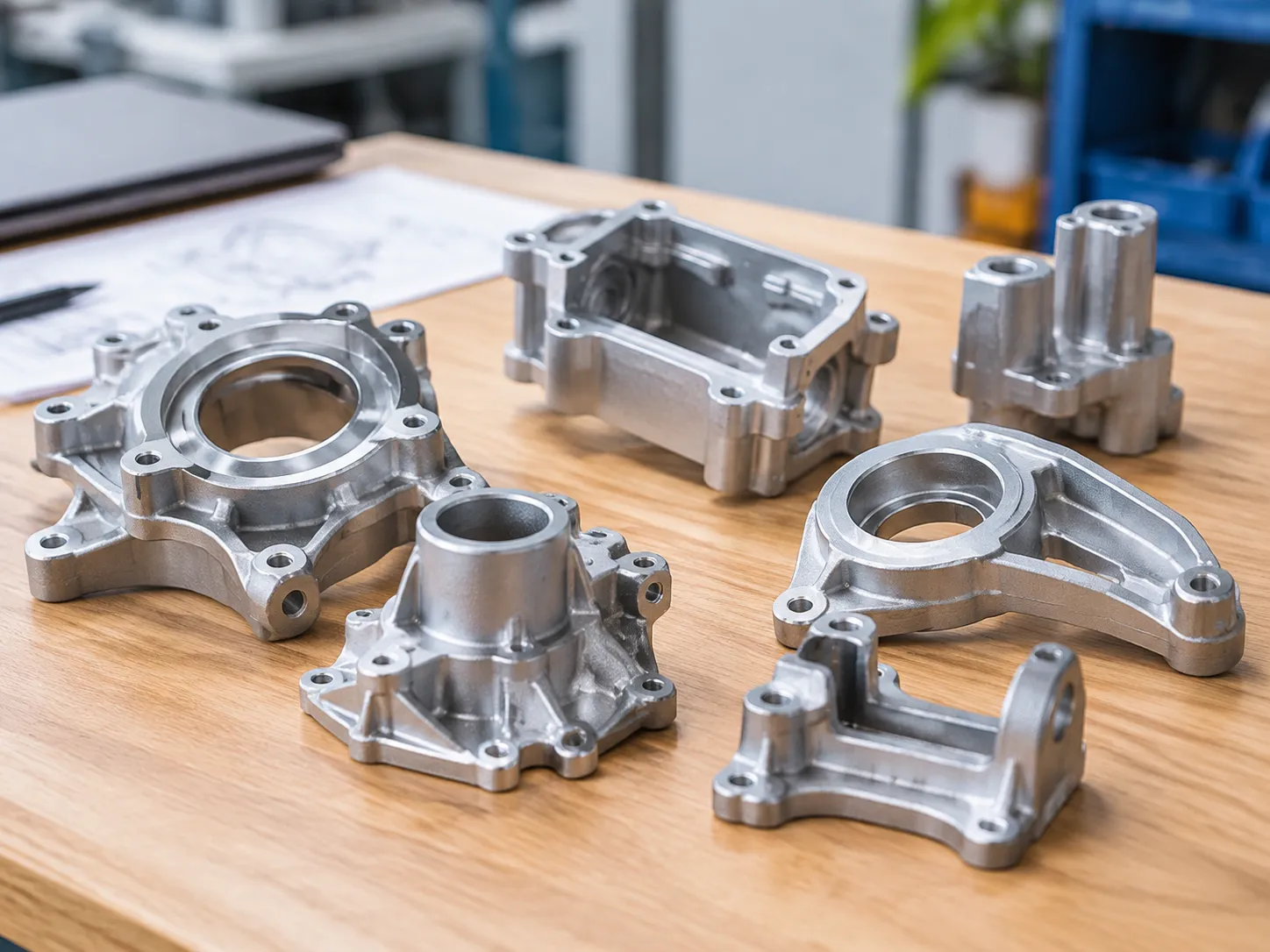
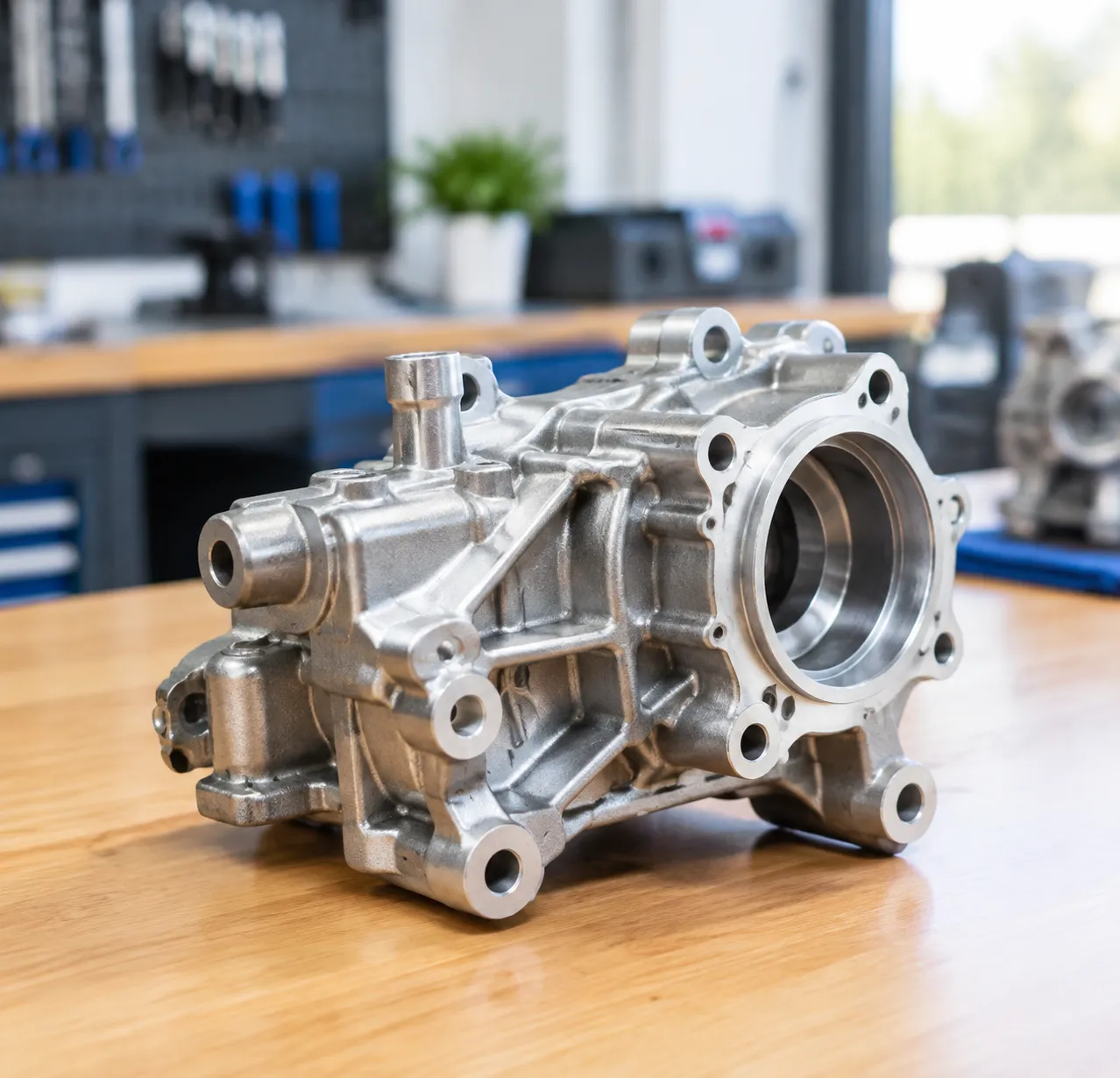
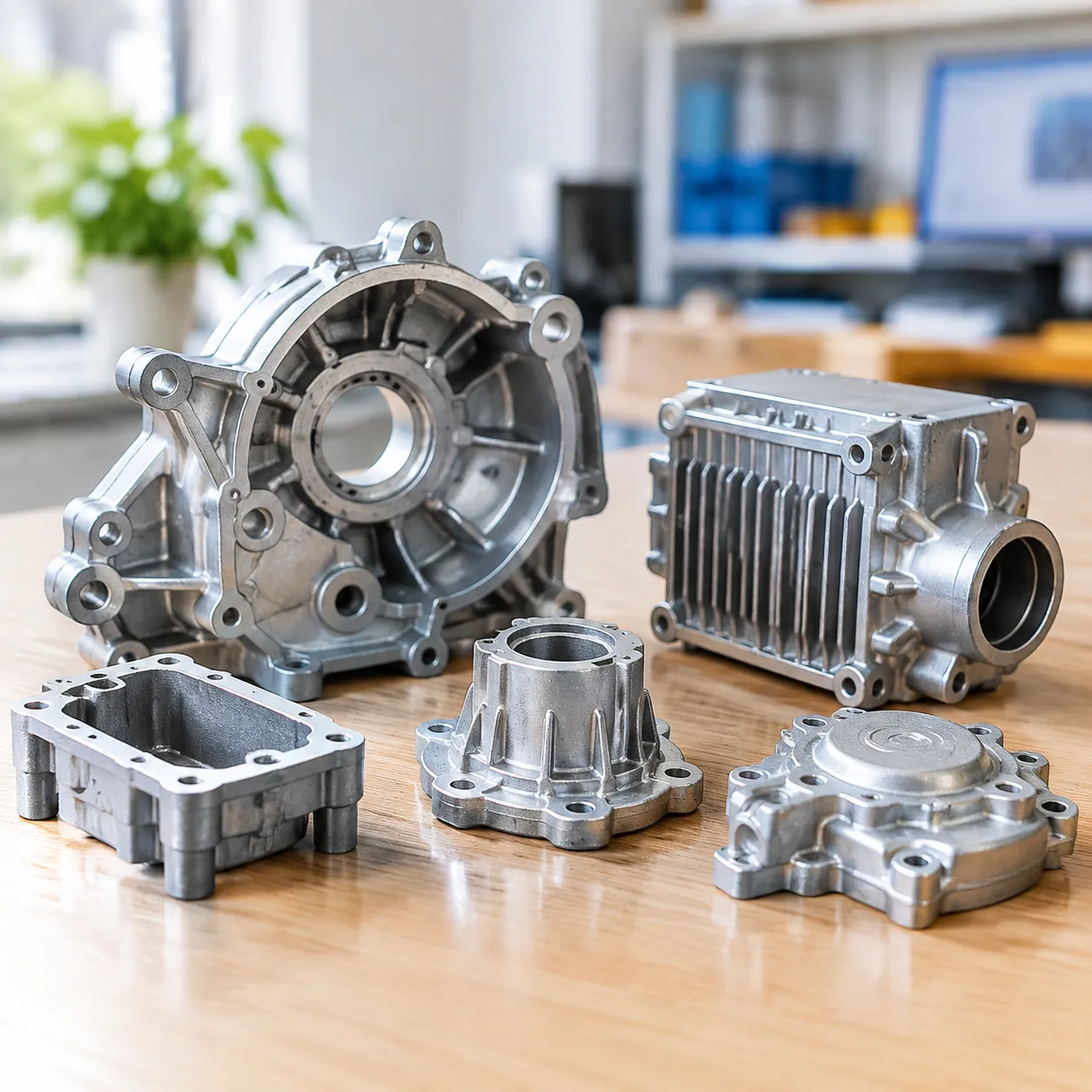
- Automotive non-engine parts: transmission housings, engine brackets, brackets and covers
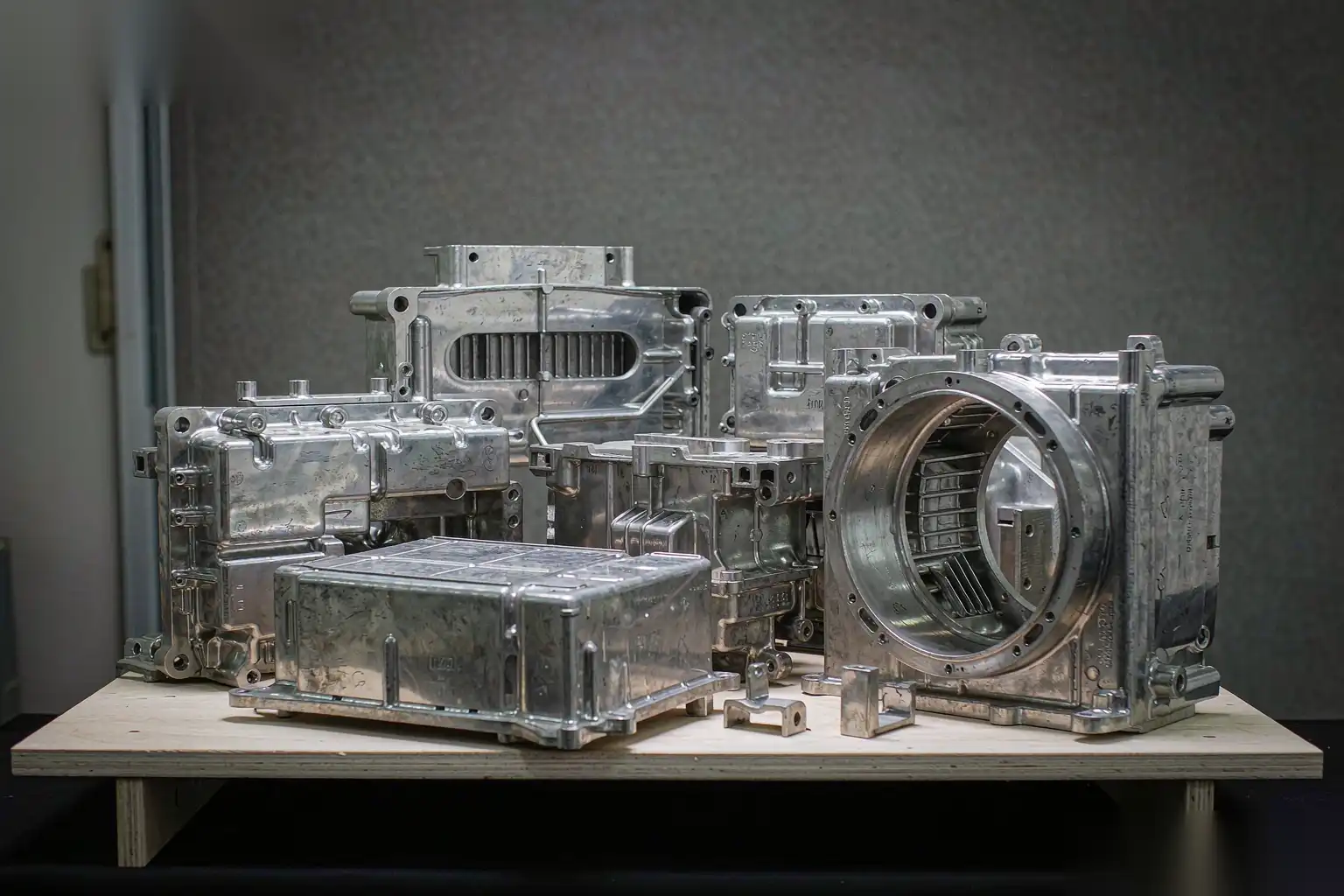
- Consumer electronics housings: laptop shells, monitor frames, power tool bodies
- Lighting fixtures: heat sinks, LED housings, downlight bodies
- Furniture hardware: chair arms, decorative mounts
- Industrial equipment housings: motor frames, pump bodies (non-pressure)
- Appliance components: handles, brackets, internal frames
The pattern: structural or semi-structural parts where strength matters more than corrosion resistance or pressure tightness.
Where A380 Is the Wrong Choice
Avoid A380 in these situations:
- Marine or salt-spray environments: the 3-4% copper makes A380 vulnerable to galvanic and pitting corrosion. Use a low-copper alloy (A413, A384) or apply robust surface treatment.
- Pressure-tight hydraulic or pneumatic components: A383 or A413 is better.
- Wear surfaces (slides, bearings): A390 is much better.
- Food contact without coating: copper can leach; specify A413 or apply a food-grade coating.
- Welded assemblies (post-casting): the copper content causes hot cracking. Use A5356 filler with caution, or use an alloy designed for welding.
- High-temperature service (>200°C continuous): A380 softens significantly above 150°C. For high-temp applications, use A390 or a different alloy family.
Corrosion Behavior of A380
A380’s corrosion resistance is moderate — better than steel, worse than many other aluminum alloys. The copper content forms Al₂Cu intermetallics that act as cathodes and accelerate pitting corrosion in salt environments.
Practical guidance:
- Indoor dry environments: no surface treatment needed for corrosion protection.
- Indoor humid environments: clear anodizing or chromate conversion is sufficient.
- Outdoor sheltered: powder coating or Type II anodizing.
- Outdoor exposed / marine: Type II anodizing + sealing, or powder coating over a chemical conversion coating.
If the spec calls for “corrosion-resistant aluminum die casting”, ask what environment. A380 with proper finishing can survive 1,000+ hours salt spray, but a low-copper alloy is a better starting point.
Die Casting Behavior of A380
A380 was designed to cast well. Key behaviors:
- Filling: the 8% silicon content gives a near-eutectic melt that flows into thin sections (down to 1.0 mm wall with proper die design) without cold shuts.
- Die soldering: the iron content (0.7-1.1%) deliberately forms Al-Fe intermetallics that prevent the molten aluminum from welding to the die steel. This extends die life.
- Shrinkage: A380 has a casting shrinkage of about 0.5-0.7%. The die designer accounts for this, but it is a real source of dimensional variation in production.
- Porosity: gas porosity is inherent to the high-pressure die casting process. It is most severe in thick sections (over 4 mm wall) and at part centers. Design with uniform wall thickness to minimize it.
- Heat treatment: A380 does not respond to T6 heat treatment due to blistering. If higher strength is needed, switch alloy rather than try to heat treat.
Machining A380 Die Castings
A380 machines well — the copper content gives good chip formation, and the hardness (75-85 HB) is in a comfortable range for HSS and carbide tools. Tool life is generally good with sharp tools and adequate coolant.
Machining issues to watch for:
- Porosity: subsurface porosity can cause tool breakthrough and poor surface finish. Carbide tools with sharp edges are essential.
- Silicon content: the hard silicon particles accelerate tool wear. Use carbide or PCD tools for high-volume production.
- Coolant: avoid water-based coolants that cause staining on bare A380. Use light oil or synthetic coolants.
If the part is machined extensively after casting, consider specifying A384 or a T6-treatable alloy instead.
Common Specification Mistakes with A380
In our experience, the most common errors in A380 specifications:
- Specifying A380 for pressure-tight parts that should be A383 or A413.
- Specifying T6 heat treatment for A380, which causes blistering.
- Allowing copper substitution — some suppliers quietly drop copper content to reduce cost, which changes the alloy to a different specification.
- Overspecifying mechanical properties beyond what the die casting process can reliably deliver (elongation > 5%, for example).
- Ignoring recycled content — A380 routinely contains 30-50% recycled aluminum. If your application requires primary metal, specify it explicitly.
A380 Cost and Availability
A380 is the cheapest aluminum die casting alloy, typically 5-15% less than the alternatives. The reason: it uses a high percentage of recycled content, the die casting parameters are well-known, and the alloy is available globally from multiple primary smelters.
For cost-sensitive projects where A380’s properties are adequate, there is no reason to use anything else. For projects where A380’s properties are marginal, switching alloys early in the design phase is far cheaper than trying to make A380 work in an application it was not designed for.
A380 in Production: The Process Windows That Matter
On paper, A380 tolerates a wide processing window; in production, the profitable part of that window is narrower than most buyers assume. Melt temperature wants to sit between 670 and 700°C at the furnace and arrive at the shot sleeve without long holds that burn off magnesium and grow oxide. Die surface temperature belongs in the 180 to 220°C band during steady-state production — cold dies produce cold shuts, hot dies produce soldering and flash. The intensification phase deserves the most attention: 60 to 100 MPa applied until full solidification is what suppresses shrinkage porosity in thick sections, and letting that pressure decay early is the single most common hidden cause of leaking castings.
Shot profile discipline matters as much as the numbers. The slow-shot phase should push metal into the sleeve without rolling air into the stream, then transition to fast shot at a consistent fill position cycle after cycle. When buyers audit a die casting supplier, this is what to look at on the monitoring screen: not whether the machine has the latest controls, but whether the shot profile trace overlaps itself from shot to shot. Tight overlap means a capable process; scatter means porosity will drift.
When DZ Machinery reviews a customer’s casting line, the finishing defects we see — edge burrs that vary hour to hour, surfaces that polish unevenly — usually trace back to these upstream windows drifting. That is why our process reviews always include the shot monitor data, not just the finishing cell. Fix the window and the finishing robot’s program stops chasing a moving target.
FAQ About A380 Aluminum Alloy
Is A380 the same as ADC12?
Functionally yes — the compositions are very close, with minor differences in iron and zinc limits. Parts designed to A380 spec will typically pass ADC12 spec and vice versa, with a few exceptions at the composition limits. Confirm with your supplier if the spec must match exactly.
Can A380 die castings be anodized?
Yes, but the copper content causes the anodized layer to appear grayish rather than the bright clear of low-copper alloys. For decorative anodizing (visible consumer parts), use A384 or a low-copper alloy. For hardcoat anodizing (Type III) for wear resistance, A380 works fine.
What is the maximum service temperature for A380?
Continuous service at 150-180°C is the practical limit. Above that, the alloy overages and loses strength. Short peaks at 200-220°C are acceptable, but the part should not see this temperature continuously.
Is A380 food-safe?
A380 contains copper, which can leach into acidic foods. For food contact, specify A413, apply a food-grade coating, or use a different alloy family entirely (such as 3003 or 5052 for sheet applications).
Choosing the Right Alloy for Your Project
The right alloy is determined by the part’s functional requirements, not by what the supplier recommends by default. A380 is the right answer about 70% of the time. The other 30% — pressure tightness, marine exposure, wear surfaces, decorative anodizing — needs a different choice.
At DZ Smart Manufacturing, our deburring and polishing cells work with all common die casting alloys, but the abrasive selection and process parameters change. If you are evaluating a new part and want an honest opinion on whether A380 is the right alloy — or whether your supplier’s “A380” is actually a different alloy that will not perform the same — send us the material certification and we will tell you what we see.