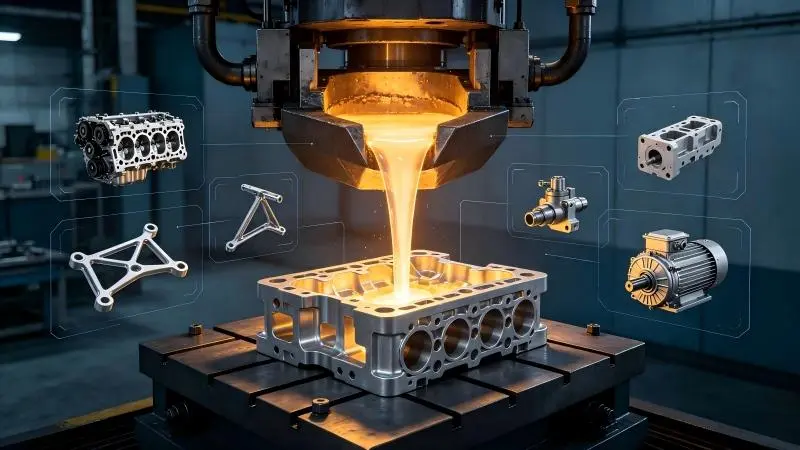
Investing in a robotic deburring machine is a significant capital decision. With prices ranging from USD 20,000 to over USD 70,000 for a complete turnkey system, choosing the wrong solution can cost your foundry months of lost productivity and thousands in rework.
This buyer’s guide cuts through the marketing noise. It covers everything you need to evaluate, compare, and select the right robotic deburring machine for your specific casting operation—from key specifications and tooling options to ROI calculations and manufacturer selection.
What Is a Robotic Deburring Machine?
A robotic deburring machine is an automated system that uses an industrial robot arm equipped with deburring tools—carbide burrs, compliant brushes, floating heads—to remove burrs, flash, and sharp edges from metal castings. Unlike manual deburring, the robot follows pre-programmed paths with force-feedback control to deliver consistent results across every part.
These systems are designed for foundries processing brass, aluminum, zinc, and iron castings. They are widely used in faucet manufacturing, automotive parts, door hardware, and general metal finishing operations.
Robotic vs. Manual Deburring: Key Differences
Before delving into specifications, it helps to understand how robotic deburring compares with manual methods on the metrics that matter to your bottom line:
| Factor | Manual Deburring | Robotic Deburring | Improvement |
|---|---|---|---|
| Consistency | Operator-dependent | ±0.1mm repeatable | High |
| Throughput | 20–40 parts/hr | 60–150 parts/hr | 2–4x faster |
| Scrap Rate | 3–8% | under 1% | 70–87% less |
| Labor Cost | 2–3 operators/shift | 1 operator/2 cells | 50–60% savings |
| Training Time | 2–4 weeks | 1 week (program) | Faster ramp-up |
| Safety Risk | High (cuts, dust, RSI) | Low (guarded cell) | Significant |
| Scalability | Hire more workers | Add robot cells | Linear scaling |
Key Specifications to Evaluate
When comparing robotic deburring machines, these specifications determine whether a system will work for your specific castings:
- Robot Reach and Payload: For deburring, a reach of 1,200–2,000 mm is typical. Payload requirements are moderate (6–20 kg) since deburring tools are relatively lightweight. However, if the robot handles the part instead of the tool, payload must accommodate the heaviest casting.
- Axis Configuration: Six-axis robots are standard for deburring. They provide the articulation needed to reach internal cavities, angled edges, and complex geometries. SCARA or 4-axis robots are only suitable for simple, flat-edge deburring.
- Force/Torque Sensor: This is the single most important feature for deburring quality. A 6-axis force/torque sensor allows the robot to maintain consistent contact pressure against the casting edge. Without it, the robot cannot compensate for casting variations, resulting in under- or over-deburring.
- Spindle Power and Speed: The spindle that drives the deburring tool must match your material. Aluminum and zinc require high RPM (10,000–20,000) with lower torque. Iron and steel require lower RPM (3,000–8,000) with higher torque. Electric spindles are preferred over pneumatic for precision control.
- Tool Changer: Automatic tool changers allow the robot to switch between deburring tools (carbide burr, brush, file) within a single cycle. This is essential for complex castings that require multiple deburring operations.
- Controller and Software: The robot controller must support offline programming (CAD-to-path), force-control algorithms, and vision integration. Look for controllers that accept part programs via USB or network to minimize downtime during changeovers.
Robotic Deburring Machine Cost Breakdown
Understanding the total cost of a robotic deburring system helps you budget accurately. Here is a typical cost structure for 2026:
| Component | Entry-Level (USD) | Mid-Range (USD) | Premium (USD) |
|---|---|---|---|
| Robot Arm + Controller | 15,000–25,000 | 25,000–40,000 | 40,000+ |
| Deburring Spindle | 2,000–4,000 | 4,000–8,000 | 8,000–15,000 |
| Force/Torque Sensor | 3,000–5,000 | 5,000–8,000 | 8,000–12,000 |
| Tooling Package | 1,000–3,000 | 3,000–6,000 | 6,000–10,000 |
| Safety Cell + Fixtures | 5,000–10,000 | 10,000–20,000 | 20,000+ |
| Programming + Training | 3,000–5,000 | 5,000–10,000 | 10,000–15,000 |
| Total System Cost | 29,000–52,000 | 52,000–92,000 | 92,000+ |
ROI Analysis: What to Expect
Robotic deburring machines typically deliver payback within 12–24 months. The actual ROI depends on your production volume, labor costs, and scrap rates:
- Labor Savings: A single robotic deburring cell replaces 2–3 manual deburring operators per shift. At an average manufacturing labor cost of USD 5–15/hour across target markets, this saves USD 20,000–90,000 annually per cell.
- Scrap Reduction: Manual deburring scrap rates of 3–8% drop to under 1% with robotic deburring. For a foundry producing USD 500,000 worth of castings monthly, this alone saves USD 10,000–35,000 per month.
- Throughput Increase: Robotic deburring is 2–4x faster than manual work. This means fewer bottlenecks in your finishing line and the ability to take on more orders without increasing headcount.
- Quality Premium: Consistent deburring quality reduces customer rejections and opens opportunities for higher-value contracts that demand precision finishing.
Top Robotic Deburring Machine Manufacturers
The following manufacturers are recognized leaders in robotic deburring solutions for metal castings:
DZ SMART MANUFACTURING (China)
Specializes in turnkey robotic deburring cells for brass, zinc, and aluminum die castings. Their systems integrate force-controlled robots with customized tooling for faucet, hardware, and automotive applications. Competitive pricing with full local support.
C.O.S.M.A.P. srl (Italy)
A European leader in robotic deburring and finishing systems for sanitary ware and hardware. Known for high-precision cells and extensive application engineering. Premium pricing (USD 60,000+).
GHIDINI MACHINE (Italy)
Offers robotic grinding and deburring solutions for iron and steel castings. Strong in heavy-duty applications. Mid-premium pricing.
Wenzhou Kingstone (China)
Provides robotic deburring systems focused on the Chinese domestic and Asian markets. Good value-for-money options for standard applications.
How to Choose the Right Robotic Deburring Machine
Follow this decision framework to match a system to your specific needs:
Step 1: Define Your Part Profile
- List your casting materials (brass, aluminum, zinc, iron, steel)
- Measure part dimensions and weight (min/max range)
- Identify burr types (parting line flash, gate, core shift, ejector marks)
- Determine required deburring precision and surface finish
Step 2: Calculate Your Production Requirements
- Daily/weekly casting volume
- Deburring cycle time needed per part
- Available floor space for robotic cell
- Existing conveyor or material handling integration
Step 3: Set Your Budget
- Entry-level: USD 30,000–50,000 (single robot, basic tooling)
- Mid-range: USD 50,000–90,000 (force control, auto tool changer)
- Premium: USD 90,000+ (dual robot, vision, full turnkey line)
Step 4: Evaluate Vendors
- Request test deburring on your actual castings
- Compare cycle times and finished quality
- Check after-sales support and spare parts availability
- Verify training and programming support
- Ask for customer references in your industry
Frequently Asked Questions
How long does it take to set up a robotic deburring cell?
Installation typically takes 3–5 days. Programming for the first part family takes 1–2 days. Full production readiness is usually achieved within 2 weeks of delivery.
Can the same robot handle different casting types?
Yes. With quick-change fixturing and program recall, most robotic deburring cells can handle 5–20 different part numbers. Changeover between parts takes 5–15 minutes.
What training is required for operators?
Basic robot operation training takes 3–5 days. Programming training requires 1–2 weeks for experienced technicians. Most suppliers include initial training with the system purchase.
How long do robotic deburring tools last?
Carbide burrs typically last 500–2,000 parts depending on material. Abrasive brushes last 2,000–5,000 parts. Force control extends tool life by preventing overloading.
What is the warranty on robotic deburring machines?
Standard warranty is 12 months on the complete system. Robot arm warranties from major brands (Fanuc, ABB, KUKA) are typically 24–36 months. Extended warranties are available.
Conclusion
Choosing the right robotic deburring machine is one of the most impactful decisions you can make for your foundry’s finishing operation. The right system will reduce labor costs, improve quality, and pay for itself within 12–24 months.
Start by defining your part profile, calculating your production needs, and testing systems from multiple vendors on your actual castings. Prioritize force-controlled robots with adequate reach and the right spindle for your materials.
Ready to take the next step?
Get Your Custom Quotation
Visit: grindermachinepolish.com
LinkedIn: linkedin.com/in/dzivy
Facebook: facebook.com/xiamendingzhu1
Image & Visual Suggestions
| # | Placement | Image Type | Alt Text |
|---|---|---|---|
| 1 | Section 2 comparison intro | Comparison infographic | Robotic vs manual deburring comparison chart showing cost quality and throughput metrics |
| 2 | Section 3 (Robot specs) | System photo with callouts | Robotic deburring machine cell showing robot arm spindle and force sensor components |
| 3 | Section 4 (Cost) | Bar chart infographic | Robotic deburring machine cost breakdown by component in USD |
| 4 | Section 5 (ROI) | ROI timeline graphic | Robotic deburring machine ROI payback period timeline chart 12 to 24 months |
| 5 | Section 7 (Selection steps) | Product overview photo | DZ SMART MANUFACTURING robotic deburring cell for metal casting finishing |
© 2026 Xiamen Dingzhu Intelligent Equipment Co., Ltd. All rights reserved.
grindermachinepolish.com | DZ SMART MANUFACTURING
About the Author
Dingren Lai is the General Manager of Xiamen Dingzhu Intelligent Equipment Co., Ltd. A certified Mechanical Engineer with over 20 years of expertise in automated casting and surface finishing (deburring, grinding, and polishing). He holds multiple national invention patents for robotic finishing and low-pressure die-casting systems, empowering global manufacturers in automotive, sanitary ware, and hardware sectors.